Table of Contents
When Amitabh Bachchan danced across the screen in 1978, crooning “Khaike Paan Banaraswala,” he didn’t just deliver a hit song; he delivered one of the most powerful marketing campaigns in Indian history. In four minutes, he cemented the “Banarasi Paan” as a global brand, a symbol of joy, and a cultural mood lifter. But long before Bollywood immortalized it, and long before “customization” became a buzzword in MBA classrooms, the humble Indian paanwala was already running the world’s most sophisticated hyper-personalized business operation from a four-by-four-foot wooden kiosk.
Walk into any Starbucks, and they will ask for your name to write on a cup. Walk up to your local paan shop, and the owner won’t just know your name; he will know that you like your zarda mild, your gulkand heavy, and that on Tuesdays, you prefer a meetha paan for your wife. This is not just service; this is a cult-building mechanism. The Indian paan shop is a masterclass in product differentiation, sensory branding, and customer retention. While modern F&B startups burn millions trying to figure out “product-market fit,” the paanwala achieves it with a betel leaf and a smile. Here are nine branding lessons from the streets of India that can teach any business how to turn a commodity into a cult classic.
1. The ‘Signature’ IP: Creating a Secret Sauce
Every legendary paan shop has a secret. It might be a proprietary chatni, a specific blend of kimam (tobacco paste), or a gulkand sourced from a specific region in Kannauj. This secret ingredient is their Intellectual Property (IP). It ensures that while you can buy paan anywhere, you can’t buy this paan anywhere else.
The Business Lesson: In a crowded F&B market, what is your “secret sauce”? If your product can be easily replicated by a competitor, you are a commodity. You need a signature element—a unique spice blend, a proprietary brewing method, or a distinct serving style—that becomes the uncopyable anchor of your brand identity.
2. Hyper-Personalization: The ‘Chuna’ Control
The magic of paan lies in its infinite variables. Kattha (catechu), chuna (lime paste), supari (areca nut), varying strengths of tobacco, sweeteners, spices—every element is adjustable. The paanwala performs a real-time calibration for every customer. “Bhaiya, chuna kam rakhna” (Brother, keep the lime low) isn’t just a request; it’s a customer co-creating the product.
The Business Lesson: True cult brands allow customers to feel ownership of the product. Does your business offer rigid, pre-set options, or do you allow for the “Chuna Control”? Giving customers the agency to tweak the product to their exact liking creates a psychological bond and a sense of “this was made just for me.”
3. The Theatre of Preparation: The Experience Economy
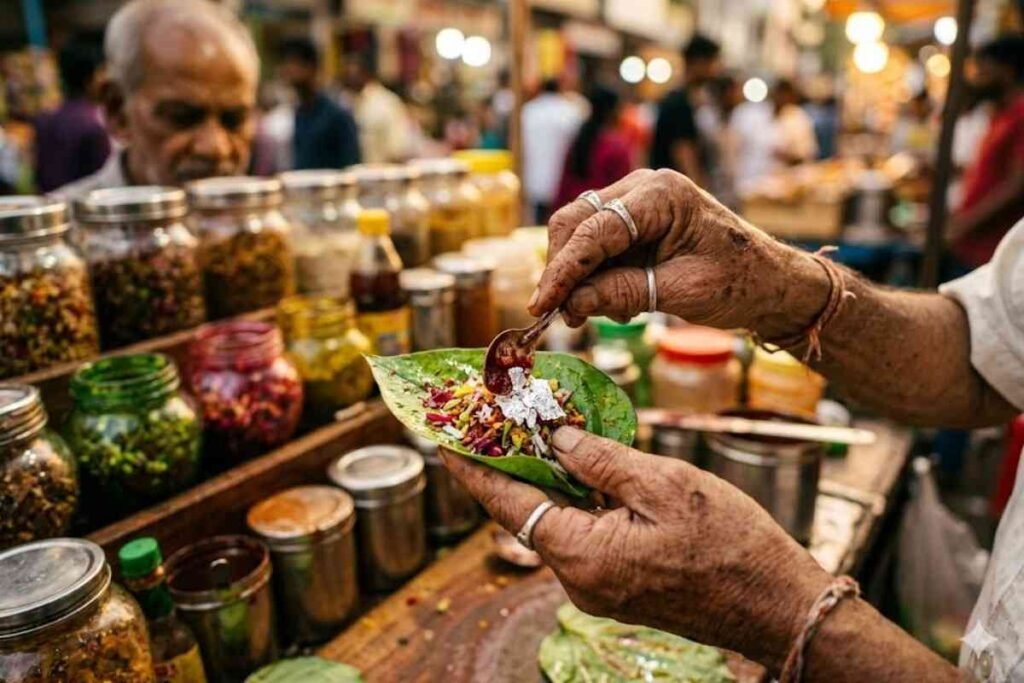
Ordering a paan is never just a transaction; it is a performance. The way the paanwala slaps the wet betel leaf onto the slab, the rhythmic blur of his hands as he daubs the pastes, the dramatic sprinkle of the masala, and the final, intricate fold of the gilouri (triangle)—it is hypnotic. This theatre builds anticipation. It signals freshness, skill, and care.
The Business Lesson: Your process is part of your product. Don’t hide the preparation in a back kitchen. Whether you are making cocktails, assembling a burger, or packaging a luxury gift, make the creation process visible and theatrical. The visual spectacle validates the price and transforms a purchase into an experience.
4. Adaptation with Integrity: The ‘Fire Paan’ Paradox
The paan industry is surprisingly innovative. When the younger generation wanted excitement, the paanwala didn’t stubbornly stick to tradition. He invented the “Fire Paan” and the “Ice Paan.” He introduced chocolate and strawberry flavours. Yet, the core product—the betel leaf vehicle—remained intact.
The Business Lesson: To stay relevant, you must evolve, but you cannot lose your soul. Successful brands innovate on the periphery (new flavours, new formats) while protecting the core (quality, tradition). The “Fire Paan” worked because it was still undeniably a paan, just reimagined for the Instagram generation.
5. Consistency as a Religion
You can visit your favourite paan shop at 2 PM on a Tuesday or 2 AM on a Saturday; the taste will be identical. The ratio of supari to gulkand is measured not by scales, but by muscle memory honed over decades. This relentless consistency builds trust. A cult following is simply a group of people who trust you never to disappoint them.
The Business Lesson: In the F&B business, a “great” product that is inconsistent is worse than a “mediocre” product that is reliable. Your processes must be so robust that the customer experience is standardized, regardless of who is behind the counter or what time of day it is.
6. The ‘Palang Tod’ Naming Convention: Viral Branding
Paan shops are famous for their evocative, often cheeky names. From “Palang Tod” (Bed Breaker) to “Raat Ki Rani” (Queen of the Night) to “120 Number,” these names are memorable, intriguing, and instantly viral. They promise a specific effect or sensation, creating a mythology around the product.
The Business Lesson: Stop giving your products boring, descriptive names. Use nomenclature to tell a story or make a promise. A distinctive name is the first hook that grabs a customer’s attention and makes the product shareable on social media.
7. The Unspoken CRM: Relationship Pricing
The paanwala doesn’t have a loyalty card, but he has the most effective loyalty program in the world. He knows the regular customer. He might throw in a free cigarette, add a little extra chaandi warq (silver foil) without charging, or simply let you run a khata (credit tab) because he trusts you. This informal, relationship-based value exchange creates an emotional debt that ensures the customer never goes elsewhere.
The Business Lesson: Technology is great, but it cannot replace human recognition. Empower your frontline staff to offer small, discretionary perks to regulars. Acknowledgment is the highest form of currency in the hospitality business.
8. The Sensory Packaging: The Fold and The Pin
The packaging of a paan is a marvel of engineering. The gilouri is folded to hold liquid contents without leaking, often secured with a single clove or a colourful pin. It is compact, portable, and releases a burst of aroma the moment you hold it. It is designed for the specific consumption context—pop it in whole, no mess.
The Business Lesson: Packaging is the final mile of your brand promise. Is your packaging functional? Is it sensory? Does it enhance the consumption experience or get in the way? The paan fold teaches us that form must follow function, but beauty (the garnish, the silver foil) is essential for delight.
9. The Community Hub: Social Proof
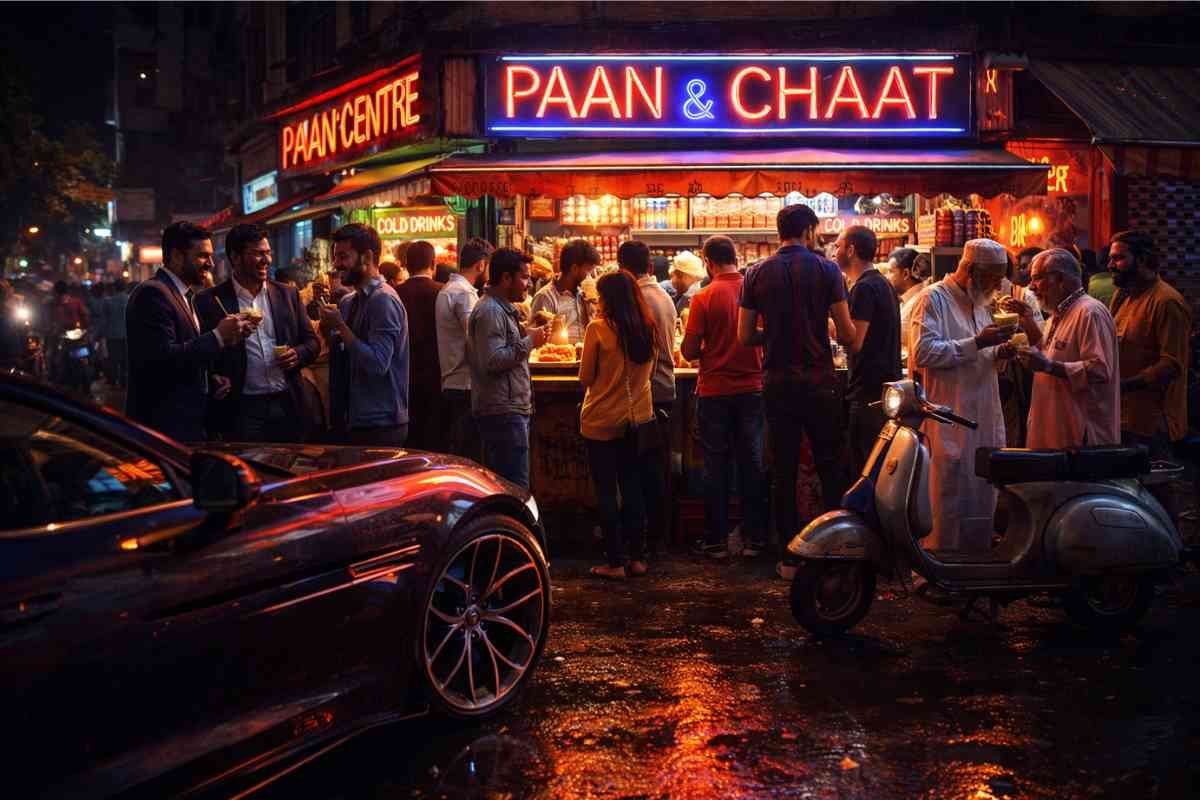
A good paan shop is never empty. It is a gathering spot, a news hub, a place to discuss politics and cricket. The crowd attracts the crowd. By acting as a micro-community centre, the shop ensures a steady footfall that has nothing to do with hunger and everything to do with social connection.
The Business Lesson: Don’t just sell a product; facilitate a community. Create a space (physical or digital) where your customers enjoy hanging out. When your brand becomes a venue for connection, your product becomes the glue that holds that community together.
From the Banarasi legend to the modern Fire Paan spectacle, the humble paanwala proves that you don’t need a multi-million dollar marketing budget to build a brand. You need a unique product, a flair for theatre, and an obsessive dedication to giving the customer exactly what they want, one folded leaf at a time.
Do you have a favourite paan shop that you swear by? What makes it special? Share your ‘paan stories’ in the comments below!