Table of Contents
In the vast, chaotic, and noisy digital bazaar of India, attention is the most expensive currency. Every day, thousands of brands scream for a millisecond of the Indian consumer’s time. Most fade into the background noise. But then, there are the anomalies. The campaigns that don’t just get viewed—they get forwarded on WhatsApp family groups, meme-fied on Twitter, and discussed over chai at the tapri.
Remember when Rahul Dravid, the epitome of calm, smashed a rear-view mirror and yelled “Indiranagar ka Gunda hoon main”? Or when the entire nation hummed “Aur Dikhao” while shopping on Amazon? These moments didn’t happen by accident. They happened because the marketers behind them stopped looking at data spreadsheets and started looking at the Indian soul.
Creating a viral campaign in India is less about marketing science and more about cultural anthropology. It requires decoding the complex, often contradictory, psyche of the Indian consumer—a person who haggles for ₹10 worth of dhaniya (coriander) but buys a ₹1 lakh iPhone, who is deeply traditional yet fiercely modern. If you want to break the internet in India, you have to break into the cultural conversation. Here are the 7 deep-seated cultural insights that act as triggers for virality in the Indian market.
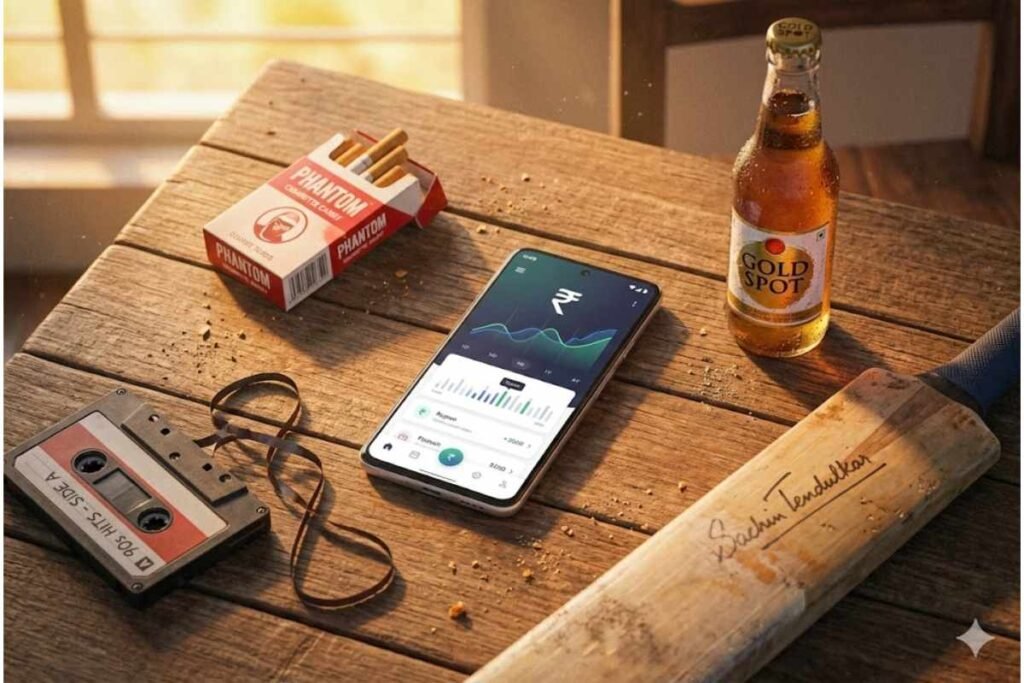
1. The ‘Nostalgia’ Loop: Selling the ’90s to Gen Z
India is currently in the grip of a massive nostalgia wave. The generation that grew up in the liberalisation era (the 90s kids) now has spending power, and they are yearning for a simpler time before the relentless notifications of the smartphone era.
- The Insight: We trust the past more than the future. Reminding an Indian of their childhood creates an immediate, visceral bond of trust and warmth.
- The Campaign Example: CRED is the master of this. By bringing back Kumar Sanu, Bappi Lahiri, and creating a mock-audition for the 90s boy band, they didn’t just sell a credit card payment app; they sold a ticket to a time machine. Paper Boat built an entire empire on this insight. Their ads about paper planes and rainy days didn’t sell juice; they sold memories.
- The Formula: Identify a collective memory (school tiffins, landline phones, cricket cards) + Connect it to your product’s simplicity = Viral Warmth.
2. ‘Paisa Vasool’: Validating the Bargain Hunter
There is no greater compliment in the Indian lexicon than “Paisa Vasool” (value for money). But this isn’t just about being cheap. It’s about the intellectual satisfaction of having outsmarted the system to get the best deal. We wear our bargains like badges of honour.
- The Insight: Indians don’t just want a product; they want to feel they have extracted every ounce of value from it. Celebrating this behaviour, rather than mocking it, wins hearts.
- The Campaign Example: Amazon India’s “Aur Dikhao” (Show Me More) campaign captured this perfectly. It showcased the Indian consumer’s insatiable desire for variety and value without being apologetic about it. It turned a “demanding customer” trait into a celebration of choice.
- The Formula: Acknowledge the demanding nature of the Indian buyer + Frame it as “Smartness” not “Stinginess” = Relatability.
3. Subverting the Idol: The ‘Self-Deprecating’ Celeb
India worships its stars—cricketers and Bollywood actors are demi-gods. But because we put them on such high pedestals, there is immense delight when they come down and laugh at themselves.
- The Insight: We are tired of the perfect, airbrushed celebrity. We crave authenticity. Seeing a god-like figure act like a confused, angry, or desperate common man is the ultimate comic relief.
- The Campaign Example: The CRED ad with Rahul Dravid works because it flips his archetype (The Wall/Mr. Dependable) on its head. Similarly, Ranveer Singh doing over-the-top energy ads for Ching’s Secret works because it leans into his caricature.
- The Formula: Take a Celebrity Archetype + Force them to act the exact opposite + High Production Value = Meme Gold.
4. The Great Indian Family Chaos
The Western concept of the individual takes a backseat in India. Here, the unit of consumption is the Family (and the extended family, and the neighbours). Our lives are messy, loud, intrusive, and full of love. Marketing that reflects this organized chaos resonates deeply.
- The Insight: Decisions in India are communal. Portraying the quirky dynamics of the Indian family—the strict father, the over-feeding mother, the nosy aunt—creates an instant “This is my house!” reaction.
- The Campaign Example: Google India’s “Reunion” ad (Pakistan-India friends) wasn’t about search; it was about connection. Swiggy’s ads often feature small, silent interplay between couples or siblings that feel like they were filmed in our living rooms. WhatsApp’s campaigns about family groups hit home because every Indian is part of a “Sharma Family Rocks” group.
- The Formula: Relatable Family Stereotypes + A Shared Emotion/Conflict + Resolution via Product = Emotional Shareability.
5. Vernacular Swag: The Rise of ‘Desi Cool’
For a long time, aspirational advertising was in English. Today, “Cool” speaks Hindi, Tamil, Marathi, and Haryanvi. The internet revolution in Tier-2 and Tier-3 cities has shifted the center of gravity. There is a new pride in local identity.
- The Insight: Your audience thinks in their mother tongue. Advertising that uses regional slang, dialects, and cultural nuances feels “authentic” and “raw.” It signals that the brand respects the local culture.
- The Campaign Example: Zomato’s localized billboards (“Oita Maadi” in Karnataka vs “Ki Hal Hai” in Delhi) work because they speak the street language. Netflix India often uses localized memes and captions that reference sacred Games or Mirzapur dialogues, effectively speaking the language of the ‘Nukkad’ (street corner).
- The Formula: Regional Slang/Idioms + Global Product Standards = Hyper-Local Trust.
6. The ‘Jugaad’ Spirit: Celebrating Ingenuity
We are a nation of problem solvers. If a lock is broken, we use a wire. If the remote battery is dead, we bite it. Jugaad (makeshift innovation) is in our DNA. Brands that acknowledge this grit and resourcefulness connect with the Indian survival instinct.
- The Insight: Indians see themselves as resilient underdogs. Campaigns that champion the “hustle” or the clever fix align with our self-image.
- The Campaign Example: Fevikwik ads are legendary for this. The “fishing” ad where a few drops catch four fish is a classic celebration of jugaad. It says: “We know you have problems; here is the quick, clever fix.”
- The Formula: An Impossible Everyday Problem + A Witty, Low-Cost Solution + Humour = The ‘Smart’ Choice.
7. Festival Emotion: The ‘Tyohaar’ Tear-Jerker
In India, a festival isn’t just a holiday; it’s an economic and emotional event. It’s when guilt, love, obligation, and joy mix together. Brands that tap into the “coming home” sentiment or the “joy of giving” during Diwali or Raksha Bandhan almost always win.
- The Insight: Indians are sentimental. During festivals, our emotional defenses are down. We are looking for reasons to connect and spend. A campaign that tugs at the heartstrings during this time bypasses the brain and goes straight to the wallet.
- The Campaign Example: Cadbury Celebrations has owned this space for decades. Their “Not just a Cadbury ad” (using AI to promote local stores) during Diwali was a masterstroke because it combined festival emotion with the “support local” sentiment. HP’s “Umeed ka Diya” ad was another tear-jerker that went viral because it focused on empathy, not the product.
- The Formula: A Social Cause/Human Story + Festival Context + Subtle Product Placement = Brand Love.
The Viral Verdict
If there is one thread connecting all these insights, it is Emotion. The Indian consumer does not buy with their head; they buy with their heart. They share content that makes them feel something—pride, nostalgia, joy, or vindication.
The next time you are brainstorming a campaign for India, put down the demographic data. Ask yourself: Does this remind them of their grandmother? Does this make them feel smart? Does this sound like a joke they would crack with their friends? If the answer is yes, you’re not just making an ad; you’re making culture. And culture always goes viral.
Which Indian ad campaign lives rent-free in your head? Was it the jingle, the emotion, or the humour? Share your favourite viral moments in the comments below!