Table of Contents
Imagine walking into a store, seeing a sleek new smartphone, realizing your bank account is empty, and yet, with a simple scan of a QR code, walking out with the phone. No credit card plastic in your wallet, no lengthy loan application, just the familiar “beep” of a UPI transaction. This is not a futuristic fantasy; it is the reality of the Reserve Bank of India’s (RBI) latest innovation: Credit Line on UPI. It is arguably the most significant shift in Indian consumer finance since the launch of UPI itself. It effectively democratizes credit, bringing the power of a credit card to millions of Indians who have never owned one. But as any seasoned elder in an Indian family will tell you, “Udhaar ki zindagi, angaron pe chalna” (A life of debt is like walking on embers).
While this feature promises unprecedented financial freedom and a safety net for emergencies, it also removes the psychological friction of borrowing. When a loan looks, feels, and sounds exactly like spending your own money, the line between affordability and bankruptcy blurs dangerously. For the financially unsophisticated user, this convenience can quickly spiral into a “digital chakravyuh” of debt.
To navigate this brave new world, you don’t need to fear the technology, but you must respect it. Here are the 8 Golden Rules to leverage UPI’s credit line without selling your soul to the bank.
The Invisible Trap: Why UPI Credit is Different

Before we get to the rules, understand the beast. Traditional credit cards act as a physical reminder that you are borrowing money. You have to pull the card out; it feels different from a debit card. UPI Credit is invisible. It sits quietly inside your GPay or PhonePe or BHIM app, right next to your savings account balance. The danger lies in this seamlessness. It makes borrowing feel casual. And casual borrowing is the fastest route to serious trouble.
Rule 1: The “Samosa vs. Surgery” Test (Define the Purpose)
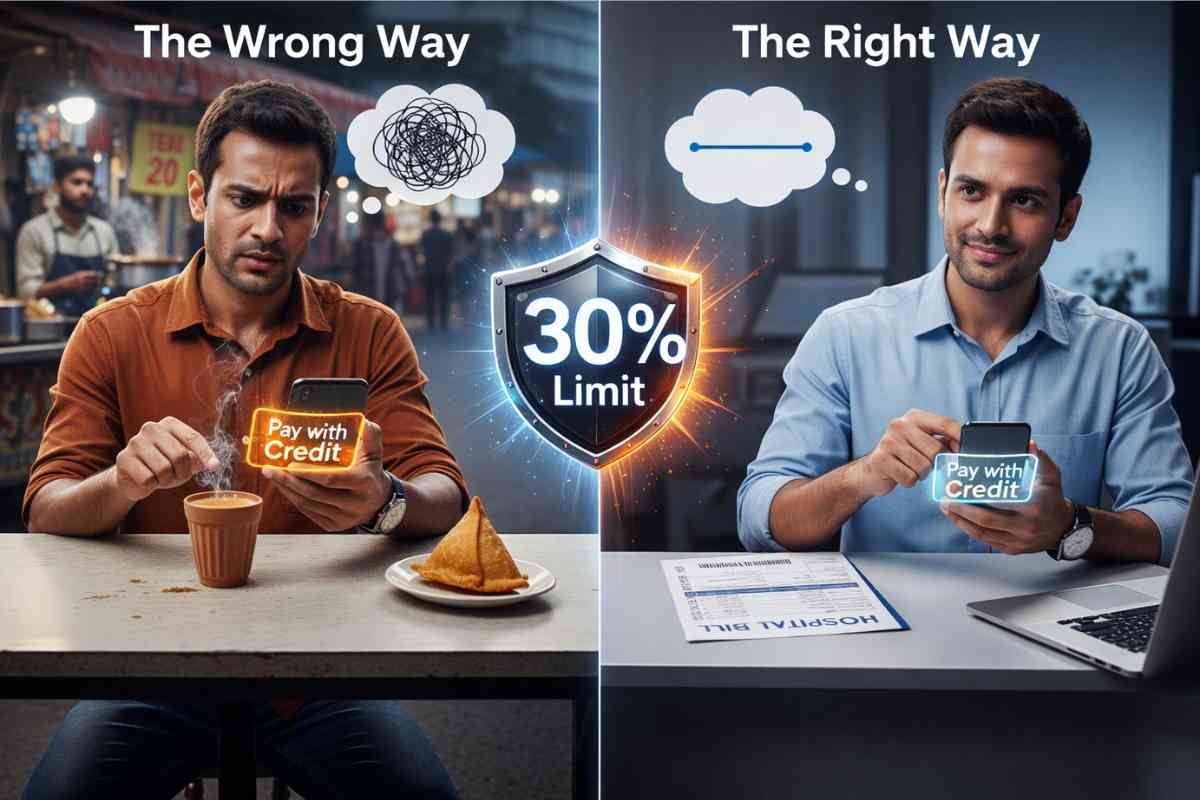
The Rule: Never, ever use UPI Credit for consumption of perishable goods or low-value daily items.
The Logic: Using a credit line to buy a samosa, a chai, or a movie ticket is a financial sin. These are consumable experiences that leave you with nothing but a debt obligation. If you cannot afford the chai with the money in your bank, you cannot afford the chai.
The Strategy: Reserve the credit line strictly for high-value durable goods (like a washing machine that saves time), genuine emergencies (medical bills, urgent repairs), or bridging a short-term cash flow gap (paying a child’s school fee two days before salary hits). If the item doesn’t last longer than the repayment period, don’t buy it on credit.
Rule 2: The 30% “Lakshman Rekha”
The Rule: Just because the bank gave you a ₹1,000,000 limit, doesn’t mean you use it. Keep your credit utilization ratio under 30%.
The Logic: Your CIBIL score is watching. Using more than 30% of your available credit limit signals to lenders that you are “credit hungry” or in financial distress. This can tank your credit score, making it harder to get home loans or car loans in the future.
The Strategy: If your limit is ₹50,000, treat it mentally as a limit of ₹15,000. Draw a mental Lakshman Rekha. Anything beyond that is a danger zone.
Rule 3: The “Auto-Pay” Non-Negotiable
The Rule: If you activate UPI Credit, you must activate Auto-Pay for the full due amount immediately.
The Logic: Human memory is flawed. We forget birthdays; we will definitely forget payment due dates. The banks are counting on this. The interest rates on these credit lines can be exorbitant (often higher than personal loans if unpaid), plus late fees. A single missed payment is a stain on your credit history.
The Strategy: Do not rely on your memory or SMS reminders. Set up a standing instruction on your salary account to clear the entire credit bill on the due date. If you are afraid you won’t have enough money in the bank to cover the Auto-Pay, you shouldn’t have spent the money in the first place.
Rule 4: Beware the “Zero Cost” Illusion
The Rule: Read the fine print. “Buy Now, Pay Later” or “EMI” on UPI often comes with processing fees or hidden costs.
The Logic: Banks are not charities. Even “No Cost EMI” schemes often have a processing fee deducted upfront, or the discount is essentially the interest amount collected by the bank. Furthermore, using a credit line might attract a “usage fee” or an annual maintenance charge that you missed in the Terms & Conditions.
The Strategy: Before tapping “Pay,” calculate the final outflow. If the item costs ₹10,000 and you are paying ten installments of ₹1,000, check for a ₹199 processing fee. That fee makes the effective interest rate much higher than zero.
Rule 5: The “Cooling Off” Protocol
The Rule: For any credit transaction over ₹2,000, institute a mandatory 24-hour waiting period.
The Logic: UPI removes friction. Credit removes the need for cash availability. This combination creates the perfect storm for impulse buying. You see it, you want it, you scan, you own it. Later, buyer’s remorse sets in.
The Strategy: If you see a gadget or a pair of shoes you want to buy on credit, add it to your cart or take a photo, and walk away. Tell yourself, “If I still desperately need this tomorrow morning, I will buy it.” 90% of the time, the urge will pass.
Rule 6: Don’t Stack Your Debt (The Chakravyuh Warning)
The Rule: Do not use UPI Credit to pay off other credit card bills or loans.
The Logic: This is known as a “debt trap” or entering a financial Chakravyuh. Borrowing from Peter to pay Paul might buy you a month of time, but it compounds your interest burden. You end up paying interest on interest.
The Strategy: If you are struggling to pay existing debts, stop spending. Do not open a new line of credit. Seek debt counseling or talk to your bank about restructuring. Using UPI Credit as a bailout mechanism is like trying to put out a fire with petrol.
Rule 7: The Privacy Audit
The Rule: Understand what data you are sharing.
The Logic: To offer you a pre-approved credit line, banks and fintech apps scrape a massive amount of your data—your spending habits, your location, your transaction history.
The Strategy: Be aware of the permissions you grant. While you can’t often use the service without them, knowing that your “financial privacy” is the cost of this “convenience” might make you think twice about whether you really need that credit line active.
Rule 8: Treat It Like a Loaded Gun
The Rule: Keep the feature disabled or “locked” when not in use.
The Logic: A pre-approved credit line sitting open on your phone is a security risk. If your phone is stolen or hacked, a thief doesn’t just empty your bank account; they can max out your credit line, leaving you with debt for money you never spent.
The Strategy: Most apps allow you to temporarily disable or “freeze” the credit line usage. Keep it frozen. Unfreeze it only for the specific minute you are making a planned, high-value purchase, and then freeze it again immediately.
Conclusion: You Are the Master, Not the App
The introduction of Credit Lines on UPI is a testament to India’s fintech prowess. It is a tool of immense power. But as the old adage goes, with great power comes great responsibility.
Used wisely, it can be a ladder—helping you build a credit score, manage cash flow during festivals, and handle emergencies with dignity. Used poorly, it is a shovel—helping you dig a hole of debt so deep that climbing out becomes a lifelong struggle.
The difference between the ladder and the shovel is discipline. In this new era of invisible money, your greatest asset is not your credit limit; it is your self-control. So, go ahead and activate the feature, but keep these 8 Golden Rules pasted on your mental wall. Let the technology serve you, not enslave you.
Call to Action:
Have you activated the Credit Line on your UPI app? Are you finding it a blessing or a temptation? Share your experiences and your own rules for financial safety in the comments below. Forward this survival guide to your younger cousins and friends who love to shop, and follow IndiLogs for more insights on mastering the Indian economy.