Table of Contents
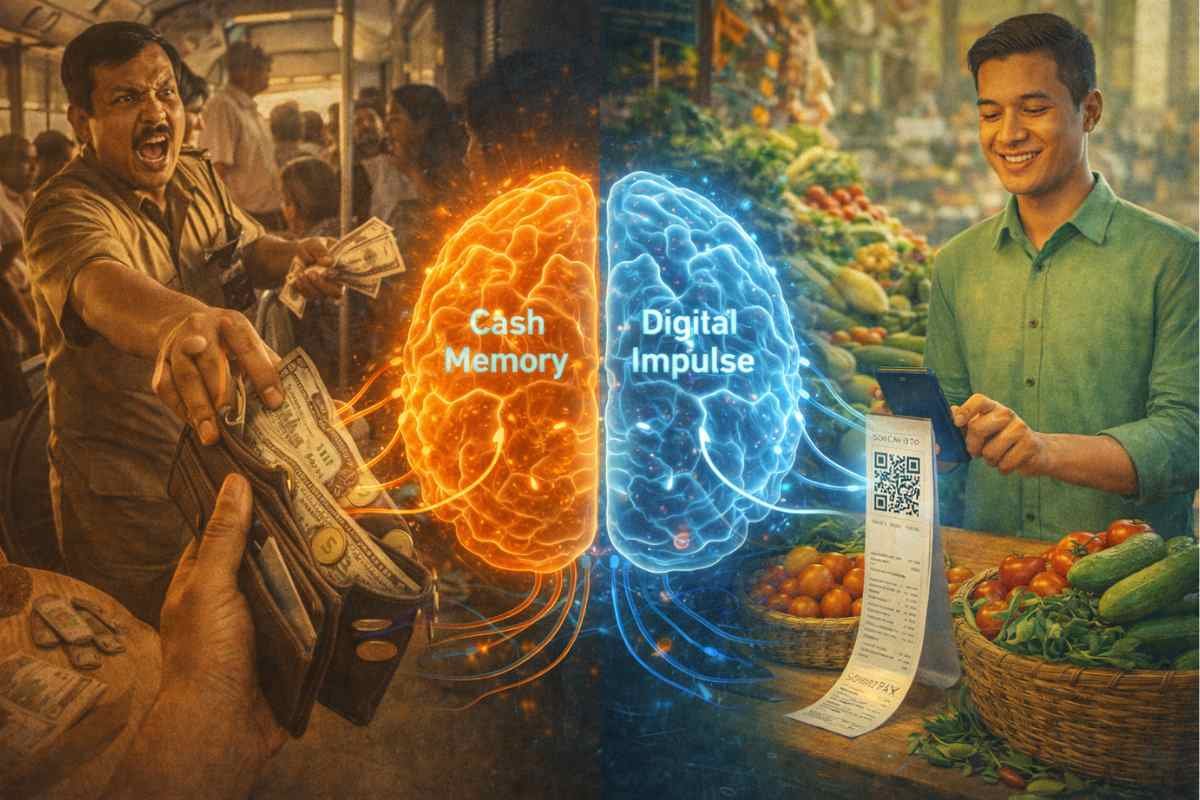
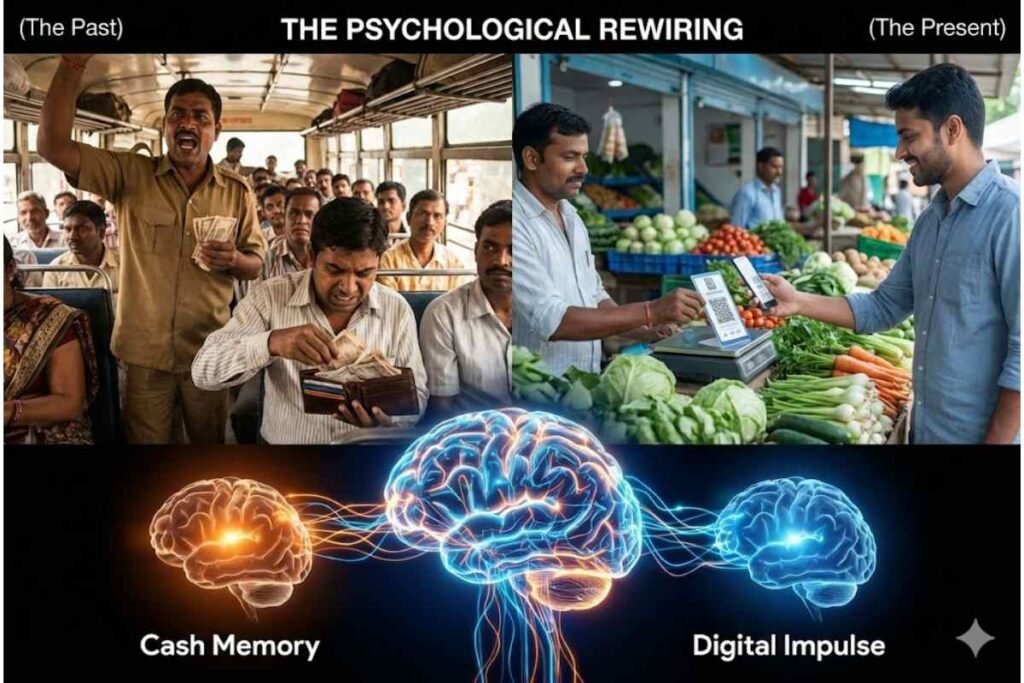
If you are reading this, chances are your wallet is currently lighter than it was five years ago. Not because you are broke (hopefully), but because the thick wad of Gandhi-emblazoned notes, the jingle of coins, and the collection of receipts have all evaporated into the digital ether. India has pulled off one of the fastest financial migrations in human history. We moved from a cash-is-king society to a “Scanner Kahan Hai?” (Where is the scanner?) civilization in the blink of an eye. But this wasn’t just a technological upgrade; it was a deep psychological overhaul.
Changing a habit ingrained over centuries doesn’t happen overnight. It’s a turbulent, emotional journey filled with skepticism, fear, thrill, addiction, and finally, a new kind of wisdom. As a seasoned observer of the Indian street, I’ve mapped out this journey. Whether you’re a college student in Pune or a retired banker in Lucknow, you have walked this path. Here are the six psychological stages everyone goes through when transitioning from cash to UPI.
Stage 1: The Skeptical Resistance (The “Dal Mein Kala” Phase)
Every journey begins with denial. In this stage, you are the quintessential “Old School Uncle,” regardless of your actual age. You view this newfangled QR code business with deep suspicion.
“Why fix what isn’t broken?” you argue at the dinner table. “Cash is real. I can see it. I can hold it. What if the internet goes down? What if a hacker in Russia steals my hard-earned salary? What if I type the wrong number?”
In this stage, you cling to your cash like a lifeline. You take pride in having exact change. You look at people waving their phones at payment counters with a mix of pity and judgment. You treat your bank account details like state secrets. The idea of linking your bank account to a third-party app feels as reckless as leaving your house keys under the doormat. You are convinced this is a passing fad, a bubble that will burst the moment the first server crashes.
Stage 2: The Tentative Experiment (The “Ek Rupaya Test” Phase)
Then comes the crack in the dam. Maybe it was the peer pressure from friends splitting a dinner bill (“Yaar, just GPay me, don’t make it complicated”). Maybe it was a chai wallah who simply refused to break your ₹500 note. Or maybe it was a cashback offer that was too good to ignore.
You download the app. You set up the PIN, sweating slightly. You approach the precipice. You decide to make your first transaction. But you are Indian, so you don’t send the full amount. No, you perform the sacred national ritual of digital trust-building: The ₹1 Test Transaction.
You send one rupee to your spouse or friend sitting next to you.
“Aaya kya?” (Did it come?) you ask, staring intensely at their screen.
“Haan, aa gaya,” (Yes, it arrived) they confirm.
A wave of relief washes over you. It works. The money didn’t vanish into the void. You then proceed to send the rest of the amount, feeling a rush of adrenaline. You have dipped your toe in the digital river, and the water is fine.
Stage 3: The Convenience Discovery (The “Jaadoo” Phase)
This is the honeymoon period. The dopamine hits are coming fast and strong. You suddenly realize the immense friction you had been living with all your life. No more fighting with auto drivers over ₹2 change. No more frantic late-night runs to the ATM because you need to pay the maid in the morning. No more bulky wallet ruining the line of your jeans.
You walk into a shop, scan, tap, and leave. You feel like a wizard casting a spell. You start evangelizing the technology to the very people you mocked in Stage 1. “It’s so easy!” you exclaim. You start leaving your wallet at home, carrying only your phone. You feel lighter, faster, modern. You look at cash users now with the same pity they once directed at you. “Who carries paper anymore?” you scoff, tapping away for a ₹10 packet of biscuits. You are riding the wave of the future.
Stage 4: The Total Dependency (The “Nomophobia” Phase)
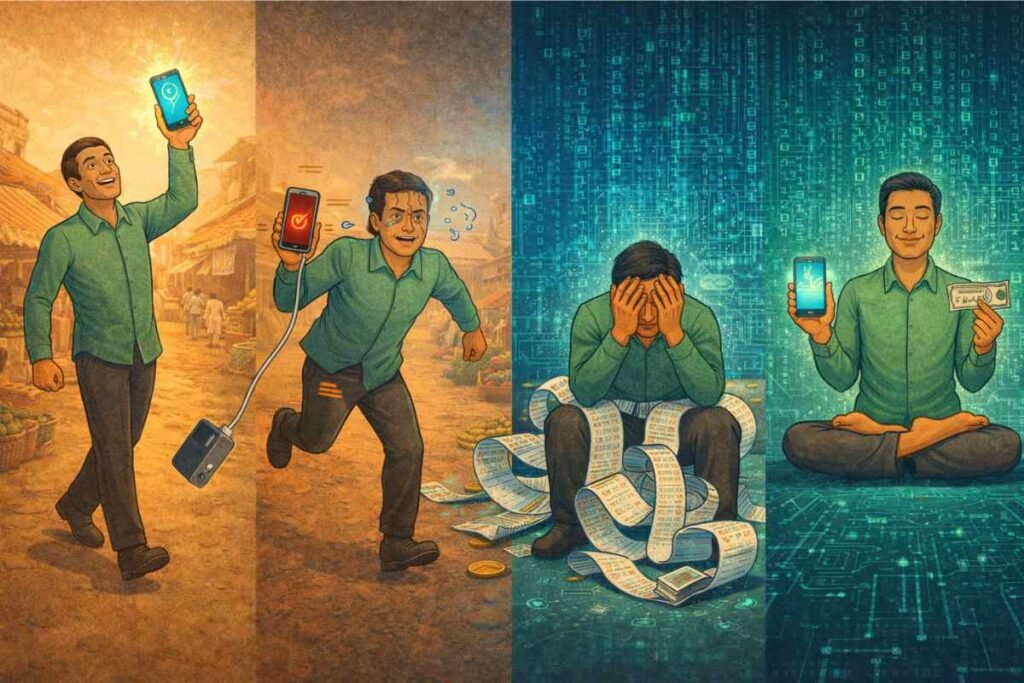
The honeymoon inevitably turns into a toxic dependency. You haven’t seen the inside of an ATM in three months. You literally do not know how much physical cash is in your house. And then, the battery icon turns red.
In Stage 4, your psychological well-being is entirely tethered to your smartphone’s battery life and network signal. The “Low Battery” warning induces a primal panic. A “Server Down” message at a payment counter feels like a personal rejection. You find yourself stranded at a vegetable cart, unable to pay ₹50 because your internet is patchy, and you have exactly zero cash on you.
You realize you have become helpless without the device. You start hoarding power banks. You learn the distinct anxiety of the loading wheel spinning for more than five seconds. You are no longer a user of the technology; you are a servant to it. The realization hits: if you lose your phone, you don’t just lose a device; you lose your ability to eat, travel, and exist in the economy.
Stage 5: The Spending Shock (The “Kahan Gaya Paisa?” Phase)
This is the rude awakening. It usually happens around the 28th of the month. You check your bank balance, expecting a comfortable cushion, and find a crater.
“How?” you wonder. “I didn’t make any big purchases!”
Then you open your transaction history. It’s a graveyard of small, mindless spends.
- ₹40 – Coffee
- ₹150 – Swiggy
- ₹80 – Uber
- ₹20 – Chocolates
- ₹200 – Subscription renewal
You realize that by removing the “pain of paying”—the physical act of handing over money—you broke your brain’s natural braking system. The frictionless nature of UPI made spending feel like a game. You realize that while you saved time, you lost the sense of value. The numbers on the screen didn’t feel real until they were subtracted from the total. This stage is characterized by regret, budget apps, and a desperate attempt to calculate where it all went wrong.
Stage 6: The Integration (The “Middle Path” Phase)
Finally, you reach wisdom. You enter the phase of Santulan (balance). You accept UPI for what it is: a brilliant tool, not a magic wand.
You start carrying a small “emergency fold” of cash behind your phone case—a ₹500 note that is never to be touched unless the servers fail. You become mindful of the small taps. You might even switch back to cash for certain categories, like groceries, just to feel the “pinch” and control your budget.
You are no longer afraid of the technology (Stage 1), nor are you blindly addicted to it (Stage 4). You have integrated it into your life. You can seamlessly switch between scanning a QR code for a friend and handing a coin to a beggar. You have evolved. You are now a true Digital Indian—tech-savvy, cautious, and always prepared for a server outage.
Conclusion: A Collective Evolution
The transition from cash to UPI is one of the most significant behavioral shifts in modern India. It forced us to confront our trust issues, our spending habits, and our relationship with technology. We have all walked these six stages, stumbling and learning along the way.
As we stand here in Stage 6, looking back at the days of ATM queues and fighting for chutta, we can smile. We have traded the weight of our wallets for the weight of our phones, and on balance, it’s been a journey worth taking. Just remember to keep that phone charged.
Call to Action:
Which stage are you currently stuck in? Are you still doing the ₹1 test, or are you in the panic of Stage 4? Share your journey in the comments below! Tag a friend who is definitely in the “Spending Shock” phase. Follow IndiLogs for more stories that map the mind of the modern Indian.