Table of Contents
The scene is intoxicatingly familiar. A startup’s war room, walls plastered with sticky notes, the air electric with the buzz of possibility. The founders, fuelled by endless cups of chai, are orchestrating a masterpiece on the whiteboard. A sophisticated go-to-market strategy, a complex product roadmap, a multi-pronged marketing plan—it’s all there, a perfect blueprint for market domination. The energy is palpable. The vision is flawless.
Fast forward six months. The energy has dissipated. The intricate strategy exists only in a forgotten PowerPoint deck. The product is behind schedule, the marketing is haphazard, and the team is grappling with a dozen unforeseen operational fires.
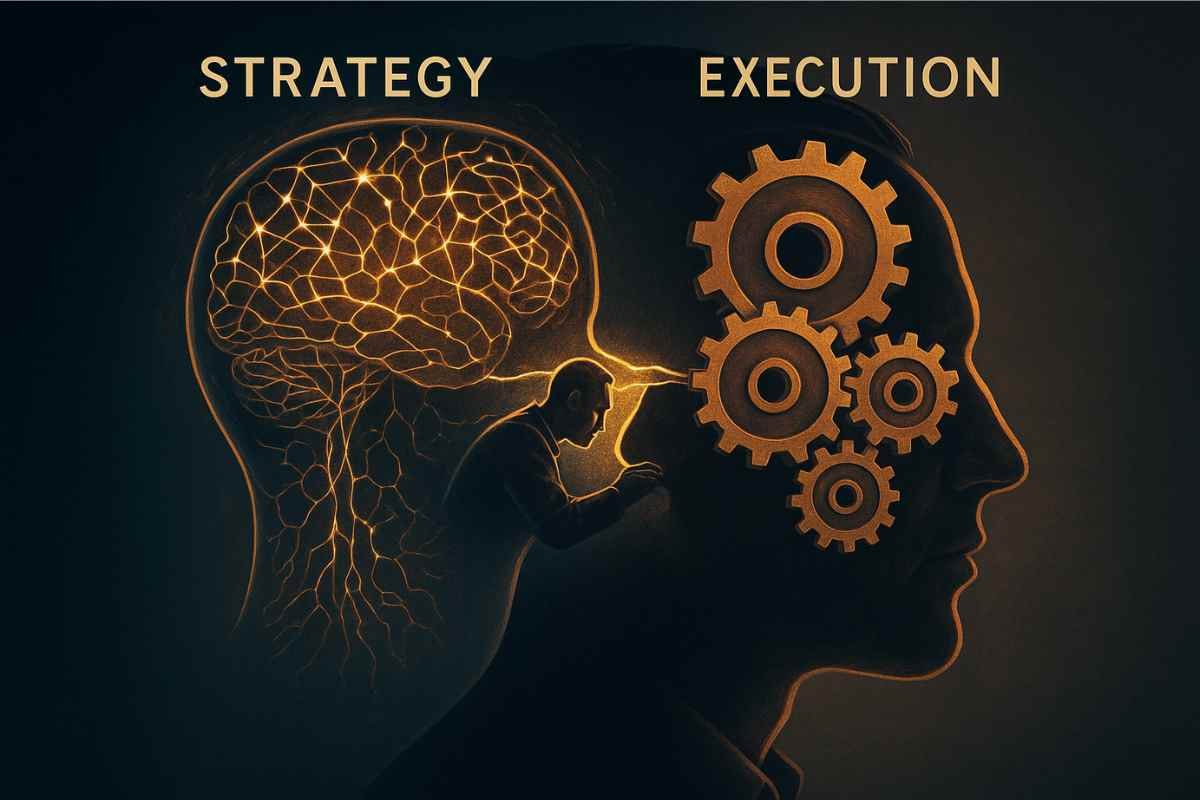
This chasm between a brilliant plan and a messy reality is the great, unspoken tragedy of the Indian startup ecosystem. It is the Execution Gap. We are a culture that reveres the thinker, the strategist, the visionary. We excel at creating complex, nuanced plans. But we often falter in the unglamorous, repetitive, and disciplined grind of turning that plan into reality. This isn’t about a lack of talent or ambition; it’s a deep-seated cultural and organizational disconnect that causes countless promising ventures to fail not because their strategy was wrong, but because it was never truly implemented.
The Glamour of the Plan, The Grind of the Process

To understand the Execution Gap, we must first understand our cultural biases. In the unspoken hierarchy of the Indian business world, the “Strategist” is a rockstar. They are the ones with the big ideas, the visionaries who chart the course. The “Operations Head,” the person responsible for the day-to-day execution, is often seen as a less glamorous role—the mechanic, not the architect.
This mindset, a possible hangover from a colonial-era “babu culture” that prized thinking over doing, creates a fundamental imbalance. We pour our best energy into the creation of the plan, but the crucial work of implementation is often seen as a secondary, lower-status activity.
The strategy session itself becomes a form of “performative work.” It feels incredibly productive to create a 50-slide deck. The team leaves the room feeling a sense of accomplishment. But this feeling can be a dangerous sedative, a substitute for the real, often boring, work of execution.
Jugaad: The Double-Edged Sword of Execution
Our celebrated national trait of jugaad—the art of the resourceful, improvised hack—also plays a complex role. While a lifesaver in a crisis, an over-reliance on jugaad can undermine the creation of disciplined, repeatable processes. A culture of jugaad is inherently reactive; it’s about finding a clever fix when something breaks. A culture of execution is proactive; it’s about building a system so robust that things don’t break in the first place.
When every problem is solved with a last-minute hack, the startup never develops the operational muscle and process discipline required to scale effectively. It remains stuck in a cycle of firefighting, never achieving true operational excellence.
The Execution Machines: Bridging the Gap
While many struggle, some of the most enduring Indian business success stories are not tales of strategic genius, but of execution supremacy.
- Indigo Airlines: Their strategy wasn’t a secret; it was a low-cost carrier model used worldwide. Their magic was—and is—relentless, fanatical execution. On-time performance, 25-minute flight turnarounds, a standardized fleet to minimize maintenance complexity. They won by being the best at the “boring” stuff.
- DMart: Radhakishan Damani’s retail empire wasn’t built on a revolutionary idea. It was built on the flawless execution of a simple strategy: “Everyday Low Cost, Everyday Low Price.” The genius is visible not in a PowerPoint presentation, but in their brutally efficient supply chain, their shrewd real estate acquisition, and their mastery of inventory turnover.
- Zerodha: In the high-stakes world of stockbroking, Zerodha’s success is a testament to technological execution. While their zero-brokerage model was a strategic masterstroke, their real moat is a tech platform that remains stable and fast on high-volatility days when their competitors’ systems often crash. Their customers trust them not just for their strategy, but because the product works when it matters most.
These companies embody a different kind of glamour: the glamour of consistency, reliability, and operational excellence.
Building a Culture of “Getting It Done”
Closing the execution gap is not about working harder; it’s about working smarter and building a different kind of culture.
- Elevate the “Doer”: Founders must consciously celebrate their operations leaders as much as their product visionaries. Make “Head of Operations” or “Chief of Staff” a position of immense power and respect. Reward teams for hitting operational milestones, not just for coming up with ideas.
- Appoint a “Chief Repeating Officer”: The founder’s most important job after setting the vision is to repeat it, relentlessly. Execution requires constant follow-up. This means creating and enforcing rituals—daily stand-ups, weekly reviews, monthly operational deep-dives—that keep the team focused on the critical tasks.
- Simplify to Execute: A 20-point strategy is a recipe for failure. A 3-point strategy is a call to action. The simpler and clearer the plan, the easier it is for the entire organization to align and execute. Force your team to answer: “What are the three most important things we need to get right this quarter?”
- Measure What Matters: Shift the focus from vanity metrics (app downloads, website visits) to execution metrics (customer retention, ticket resolution time, on-time delivery). What gets measured gets managed.
The hard truth is that in the startup world, ideas are cheap. Vision is abundant. What is scarce, and therefore infinitely more valuable, is the disciplined, often tedious, day-in-day-out commitment to execution. The Indian startups that will survive and thrive in the coming decade will not be the ones with the most brilliant strategies, but the ones who build the most resilient and reliable engines of implementation. They will be the ones who understand that the most beautiful blueprint in the world is worthless without the masons to lay the bricks, perfectly, one by one.
Have you seen the strategy-execution gap in action? What do you think is the key to building a culture of execution? Share your insights in the comments!