Table of Contents
It starts with a morning chai—scan. Then an auto ride to work—scan. A mid-morning snack ordered on Zepto—approve. Lunch with colleagues—split and pay. By the time you lay your head on the pillow, you have tapped your phone screen twenty times, and your bank balance has quietly bled out a few thousand rupees. You didn’t feel a thing. No physical cash left your hand, no wallet got lighter. Just a series of satisfying beeps and dings.
This is the paradox of the Unified Payments Interface (UPI). It is the greatest fintech innovation in the world, a marvel of Indian engineering that has greased the wheels of our economy. But for many of us, it has greased them a little too well. We have become addicted to the friction-free life, treating our hard-earned salary like an infinite video game score.
But let’s be realistic. The advice to “go back to cash” is nostalgic nonsense. You cannot survive in modern India without digital payments. You can’t pay a Swiggy delivery partner with a ₹2,000 note, and your local kirana uncle hates giving change as much as you hate asking for it. We don’t need to become Luddites; we need to become disciplined digital natives. We need a detox. Not a cold-turkey abandonment, but a structured recalibration of our relationship with the “Scan Now” button.
Here is a 30-Day UPI Detox plan designed to break the dopamine loop of instant spending while keeping the convenience of digital life intact.
The Diagnosis: Why We Are Addicted
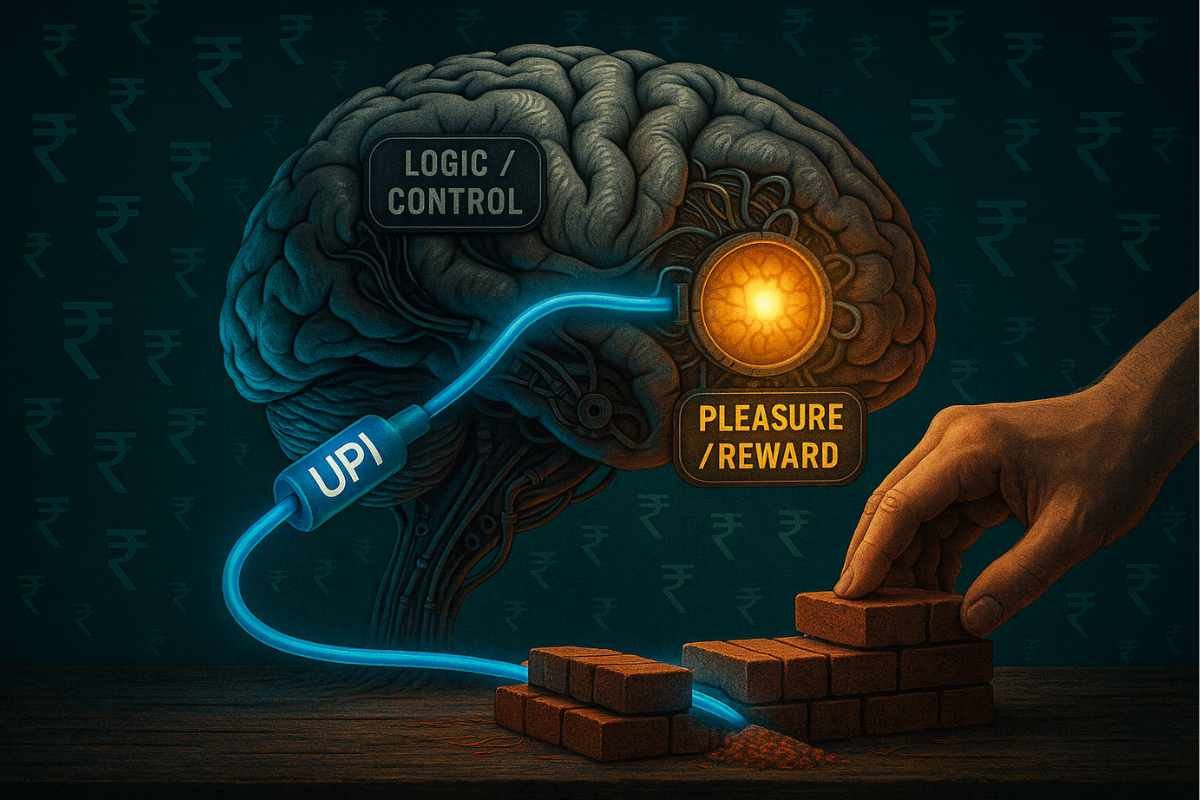
Before we start the cure, we must understand the disease. Behavioral economists call it the “Pain of Paying.” Physical cash activates pain centers in the brain; parting with it hurts. UPI creates a “payment decoupling.” The consumption (eating the burger) happens now, but the payment feels abstract and painless. Apps further gamify this with scratch cards and rewards, turning spending into a slot machine. The goal of this detox is to artificially re-introduce “friction”—to make paying feel significant again.
Week 1: The Awareness Audit (The “Watcher” Phase)
The first week isn’t about stopping; it’s about seeing. Most of us spend in a fog. Week 1 is about turning on the high-beams.
The Rule: No “Blank” Transactions.
For the next 7 days, you are strictly forbidden from leaving the “Remarks” or “Note” section blank in your UPI app. For every single transaction, no matter how small (even ₹10), you must type exactly what it is for.
- Instead of just paying, type: “Mid-day boredom snack.”
- Instead of just tapping, type: “Impulse t-shirt buy.”
The Psychology: This forces a cognitive pause. You have to label your behavior. Writing “Boredom snack” is embarrassing. That micro-second of shame is the first step to recovery. It forces you to acknowledge why you are spending, not just that you are spending.
The Tech Hack: Enable “SMS Alerts” for every transaction amount, no matter how small, and set the notification sound to something annoying. Make the spending loud.
Week 2: The Digital Partition (The “Allowance” Phase)
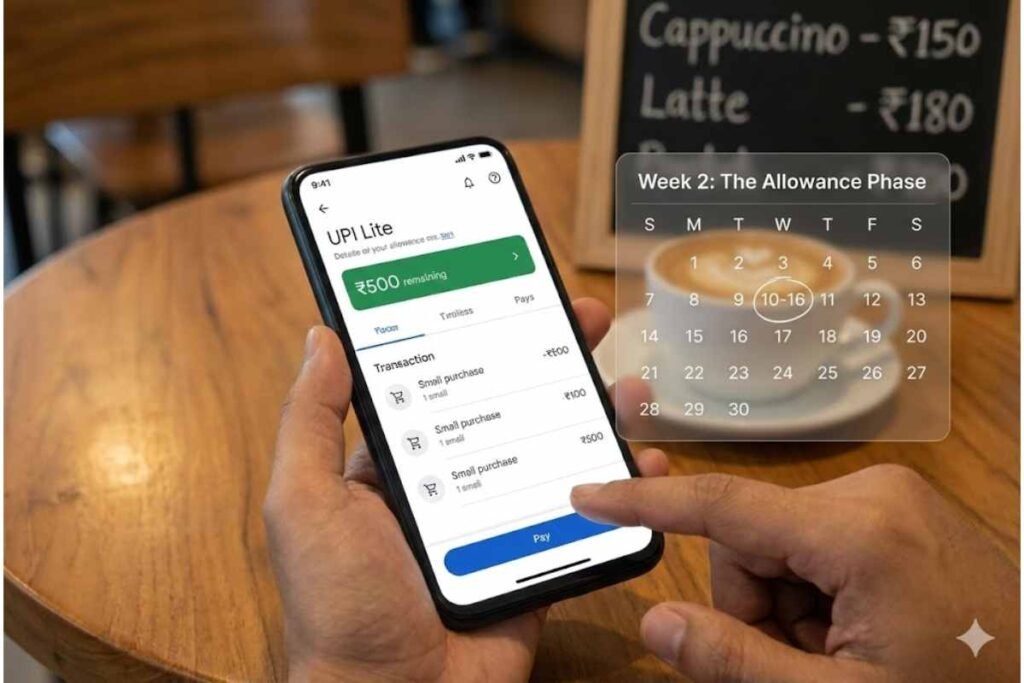
Now that you see the leaks, it’s time to plug them. The biggest mistake we make is linking our UPI to our primary salary account. It’s like connecting a firehose to a kitchen sink.
The Rule: The UPI Lite / Secondary Wallet Strategy.
- The Unlinking: Remove your main savings account (the one with your life savings) from your homescreen widget or primary selection. Make it hard to access.
- The Allowance: Activate “UPI Lite” or use a secondary digital bank account. On Monday morning, load it with a strict budget for the week (e.g., ₹3,000).
- The Hard Stop: Use this wallet for everything—groceries, travel, chai. When it hits zero, it hits zero. You are done for the week.
The Psychology: This recreates the physical limit of a wallet. When you see the balance drop from ₹3,000 to ₹500, panic sets in. You naturally start rationing. You skip the extra coffee because you need the money for the auto ride home. You are learning to manage scarcity again.
Week 3: The Friction Implementation (The “Speedbump” Phase)
By Week 3, your brain will try to rebel. It will want the dopamine hit of a quick purchase. This week is about making it physically difficult to spend money impulsively.
The Rule: The 5-Step Obstacle Course.
We are going to ruin the user experience (UX) of your app on purpose.
- Hide the App: Remove GPay/PhonePe from your home screen. Bury it inside a folder named “Do I Really Need This?”, inside another folder named “Tools.”
- Disable FaceID: Turn off biometric authentication for payments. Force yourself to type in the 6-digit PIN every time.
- The 24-Hour Cart Rule: For any online purchase (Amazon/Zomato) over ₹500, you are allowed to add it to the cart, but you are forbidden from paying for 24 hours.
The Psychology: Impulse buys have a short shelf life. If you have to dig for the app, type a PIN, and wait 24 hours, the emotional urge to buy usually fades, leaving only rational logic behind. You are replacing “hot state” decisions with “cold state” decisions.
Week 4: The Re-Integration (The “Mastery” Phase)
You have survived three weeks. You are more aware, you have lived on a budget, and you have conquered impulse. Now, we build the habit for the long term.
The Rule: The “Tags” System.
Most modern banking apps allow you to tag transactions.
- The Review: Every Sunday night, spend 10 minutes reviewing your UPI Lite history.
- The Tagging: Tag every expense: “Need” (Groceries, Medicine, Commute) or “Want” (Cafe, Movies, Shopping).
- The Ratio: Aim for a specific ratio. A healthy target for variable UPI spending is 70% Need, 30% Want.
The Psychology: This turns you from a passive spender into an active auditor. You are gamifying the saving rather than the spending. You start getting a dopamine hit from seeing the “Want” column shrink.
Conclusion: The New Normal
At the end of these 30 days, you won’t have stopped using UPI. You will still scan QR codes. You will still enjoy the speed of digital India. But something fundamental will have shifted. You will no longer be a zombie tapping a screen. You will be a conscious consumer.
You will realize that UPI is a tool, a servant. For a long time, we allowed it to become the master, dictating our habits with its seductive ease. This detox is about taking the power back. It’s about realizing that the most valuable thing in your digital wallet isn’t the money; it’s your viveka (wisdom) to choose when to let it go.
Call to Action:
Are you brave enough to take the 30-Day UPI Detox challenge? Which week scares you the most? Share your commitment in the comments below, and let’s hold each other accountable! Forward this to the friend who is always “broke” by the 15th, and follow IndiLogs for more strategies on mastering the modern Indian hustle.