Table of Contents
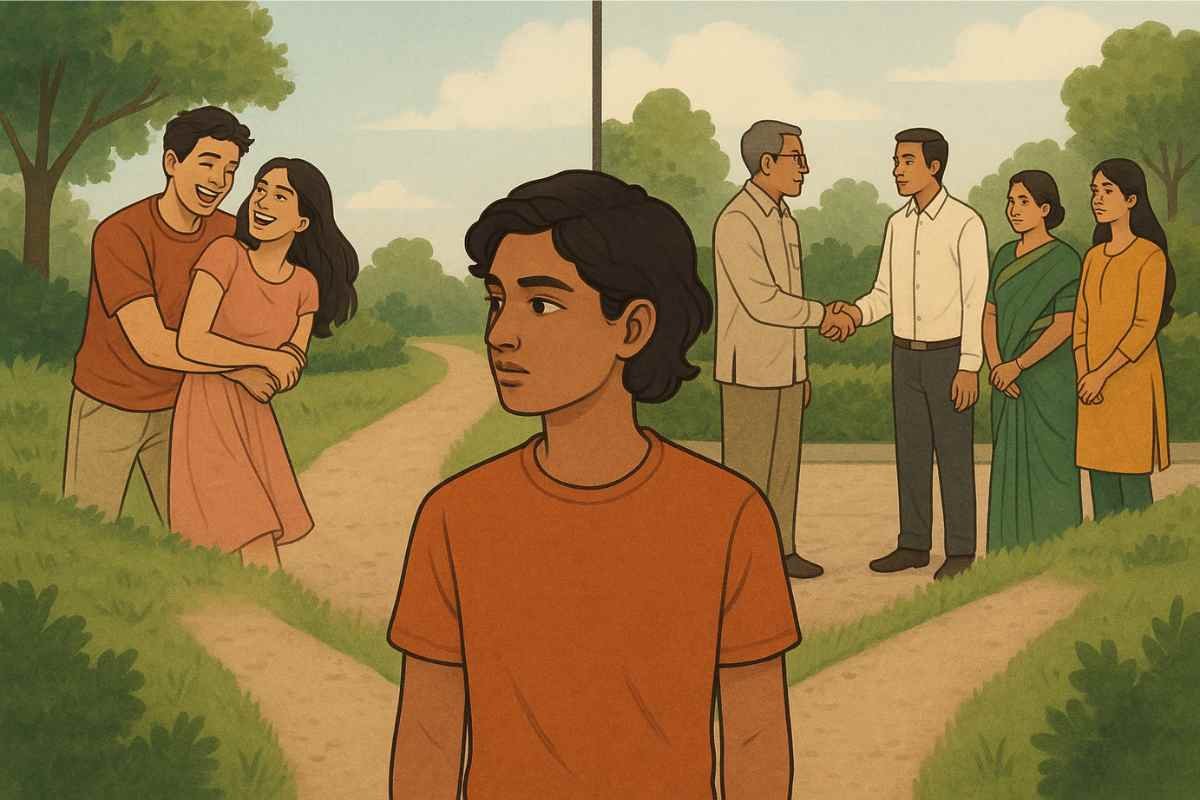
It’s perhaps the most high-stakes, emotionally charged, and quintessentially Indian decision a young person can face. On one side, there’s the thrilling, heart-thumping romance of a love marriage, a partnership forged in personal connection and shared experience. On the other, the structured, community-approved path of an arranged marriage, a union built on a foundation of family compatibility and long-term stability. Uniquely in India, both these systems run on parallel tracks, each with its own social acceptance, cultural narratives, and vocal fan clubs (usually consisting of your parents or your Bollywood-obsessed best friend).
This genuine choice is a modern privilege, but it can also be a source of immense confusion, family conflict, and personal anxiety. How do you choose? How do you know if you’re making the right decision for you? Forget the dramatic movie plotlines; making this decision requires deep, honest introspection. Here is a framework with five honest considerations to help you navigate one of life’s most significant choices.
1. Deconstruct Your Compatibility: The Spark vs. The Spreadsheet
Both paths aim for compatibility, but they start from opposite ends. The key is to apply the logic of one to the emotion of the other.
- For the Love Marriage Path: The spark is undeniable, the attraction is powerful. But you must force yourself to think like a matchmaker. Go beyond the initial chemistry. Honestly assess the “spreadsheet” factors: Do you share core values on finance, family, and future goals? Are your lifestyles and energy levels compatible in the long run? Is your partner someone you can build a stable life with, not just have a great time with? Love is the engine, but compatibility is the chassis that holds the vehicle together.
- For the Arranged Marriage Path: The compatibility “spreadsheet” is often presented to you first – similar background, education, family status. Your task is the reverse. Can you find a “spark”? Do you feel a sense of rapport, respect, and a potential for deep friendship and intimacy? You don’t need fireworks on the first “chai meeting,” but you do need a fundamental human connection. Don’t let the on-paper perfection overshadow a gut feeling of disconnect.
2. Analyze Your Support Systems: The Built-in vs. The Built-by-You
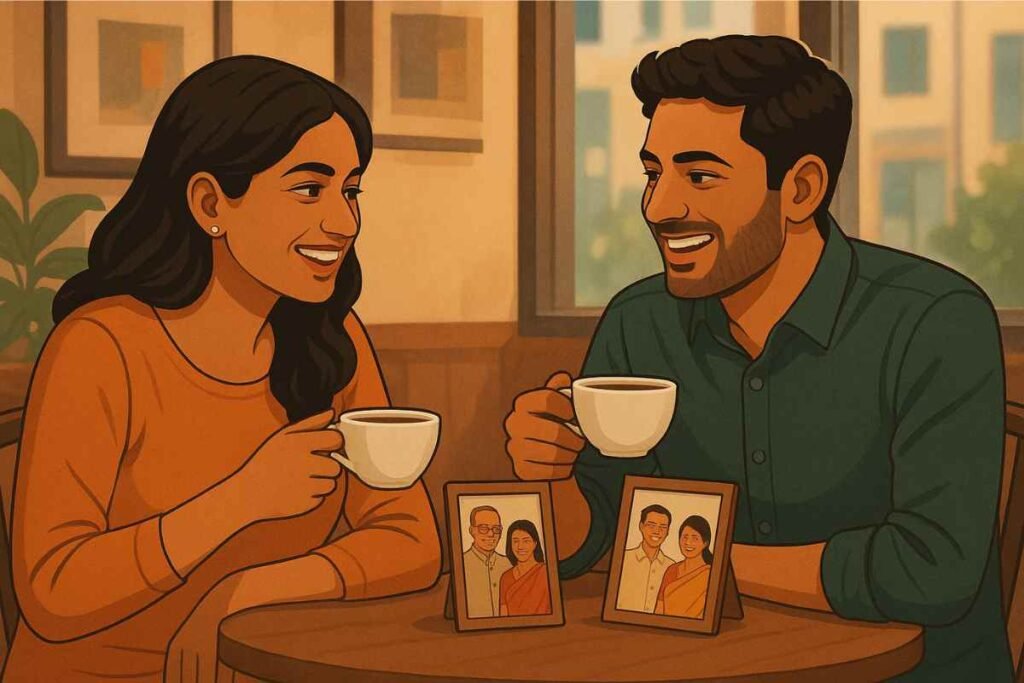
Every marriage needs a support system, but the source of that support differs dramatically.
- Arranged Marriage: Comes with a built-in, pre-approved support system. Both families are invested stakeholders from day one. In times of trouble, you have a ready-made council of elders and relatives to mediate and assist. The flip side? This support can sometimes morph into interference. Distinguishing healthy input from problematic control is crucial.
- Love Marriage (especially inter-caste/community): Your primary support system is often yourselves and your friends. You build your own “urban village.” This fosters incredible resilience and independence as a couple. However, in a crisis, you may lack the deep-rooted, automatic family backup that an arranged marriage provides. You need to be prepared to be each other’s everything, at least initially.
3. The Family Factor: Realistically Gauge the Long-Term Implications
In India, you don’t just marry a person; you marry into their family. Ignoring this is like ignoring the weather in the Himalayas – a recipe for disaster.
- Assessing Family Acceptance (for Love Marriage): If your family is resistant, don’t romanticize rebellion. Try to understand their concerns – are they valid practical points or rooted in prejudice? Is their resistance temporary, or is it a hard line that could lead to years of emotional strain and isolation? A marriage can survive without family approval, but it will be immeasurably harder. The “us against the world” narrative is romantic in movies but exhausting in real life.
- Managing Family Disappointment (in either path): Whether you choose love against their wishes or reject a series of arranged matches they approve of, managing parental disappointment requires empathy and firm boundaries. Acknowledge their feelings, but be clear and respectful about your own non-negotiables.
4. Check Your Motivation: Is it Preference or Rebellion?
Be brutally honest with yourself about why you are leaning one way.
- The Rebellion Trap: Are you choosing a love marriage primarily to defy your parents or prove a point? A relationship built on rebellion is on shaky ground once the “fight” is over.
- The Acquiescence Trap: Are you agreeing to an arranged marriage just to please your family and avoid conflict, while suppressing your own desires for a different kind of partnership?
- The Real Question: Your choice should be for someone or for a type of partnership that you genuinely believe in, not against a system or your family.
5. Debunk the Myths: Both Paths Have Potholes
It’s easy to romanticize one path while demonizing the other. The truth is, both have challenges.
- The Arranged Marriage Myth: It’s not a guaranteed fairytale of “love after marriage.” It can involve the difficult work of building intimacy with a relative stranger, dealing with intense family expectations, and navigating personalities you didn’t choose.
- The Love Marriage Myth: It’s not a Bollywood movie. The initial passion will inevitably cool and be tested by the mundane realities of bills, chores, and in-law dynamics. Love alone is not enough to sustain a marriage; it requires work, compromise, and shared values.
The Rise of the Hybrid: The “Arranged-Cum-Love” Model
Increasingly, the lines are blurring. The modern “arranged introduction” is a hybrid model. Families provide the initial screening, but the individuals then date for a period to discover if there’s a genuine connection before committing. This model attempts to leverage the sociological wisdom of the arranged system with the emotional intelligence of the love match.
Ultimately, success factors like mutual respect, communication, shared values, and a willingness to compromise transcend the marriage type. The “how you meet” is just the preface. The real story is written in the “how you live.”
Choosing a life partner is the most important decision you will ever make. Don’t let it be dictated solely by family pressure or romantic fantasy. Use this framework to think critically, assess honestly, and choose the path that offers you the best foundation for a lifetime of partnership and peace.
What are your thoughts on this choice? What factors do you think are most important? Share your invaluable insights and experiences in the comments below! And if this guide helps navigate this complex decision, please share it with anyone who might need it.