Table of Contents
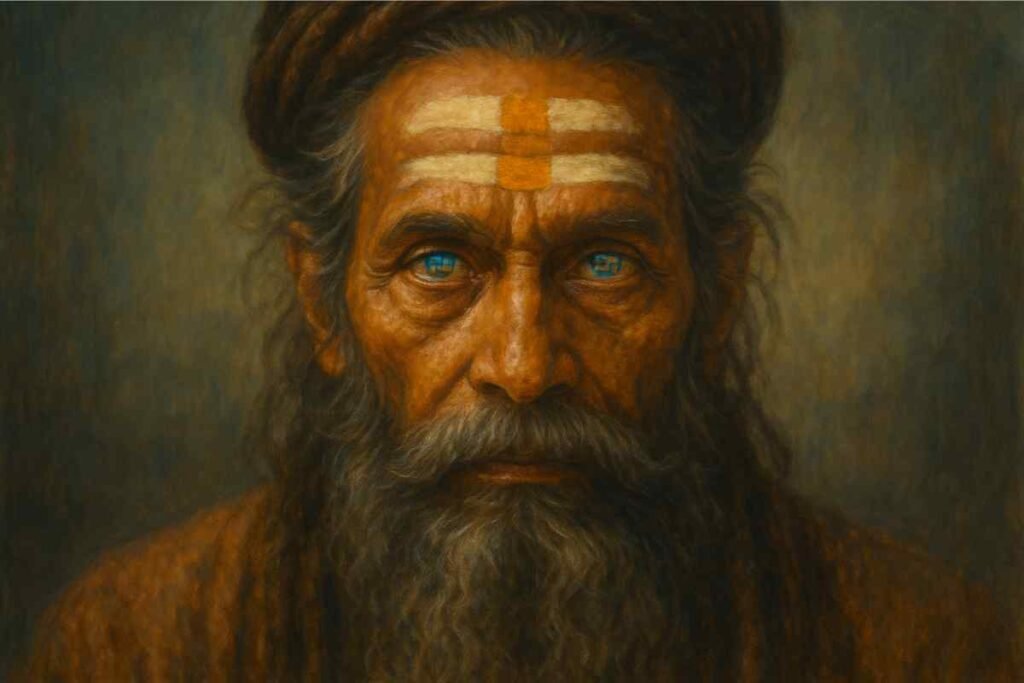
Imagine the scene: millions gathered at the confluence of sacred rivers, a tide of humanity pulsating with a single purpose. Sadhus with matted hair, their faces repositories of ancient wisdom, engage in deep debate. Philosophies clash, ideas are exchanged, and from this divine chaos, a collective spiritual energy—’jnana’ or profound knowledge—emerges. This is the Kumbh Mela, not just a physical gathering, but a pilgrimage of the mind, a living library of India’s spiritual consciousness.
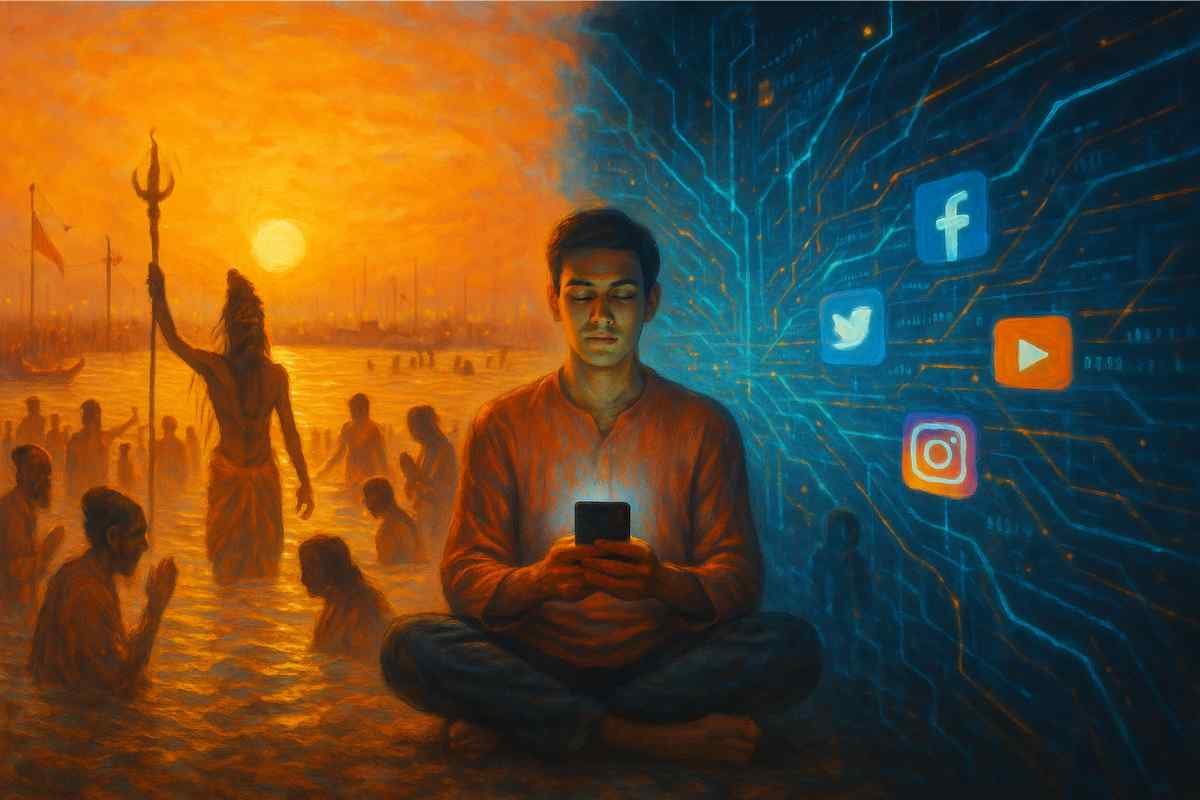
Now, pick up your smartphone. Scroll through your feed. Here, too, is a confluence—a digital Triveni Sangam of tweets, reels, podcasts, and articles. Billions of voices converge in a space that claims to be the ultimate marketplace of ideas. We follow thought leaders, join niche communities, and engage in debates that span continents. In many ways, the internet feels like our generation’s Kumbh Mela.
But as we navigate this endless digital pilgrimage, a crucial question arises: Are we truly participating in a sacred gathering of wisdom, or are we merely lost in the noise of a sprawling, chaotic fair, mistaking digital chatter for divine discourse?
This isn’t just a technological question; it’s a deeply Indian one. It touches the very core of our “India of the Mind”—that intangible landscape of philosophies, traditions, and intellectual frameworks that has defined us for millennia. Can the ethos of a satsang, a community gathered for truth, be replicated online, or are we trading the wisdom of the sadhu for the fleeting validation of the influencer?
The Sangam of Jnana: What the Kumbh Truly Represents
To understand the metaphor, we must first look past the spectacle. The Kumbh Mela, at its heart, is a dynamic ecosystem of knowledge. It’s where different sampradayas (traditions) and darshanas (philosophies) meet. A Naga sadhu’s understanding of detachment is tested against a Vedanta scholar’s discourse on Maya. Yogis share techniques, and seekers absorb wisdom not just from formal sermons, but from the very atmosphere—the shared intentionality.
Dr. Ananya Sharma, a cultural anthropologist who has studied the Mela for over a decade, puts it this way: “The Kumbh is a process of filtration. Not every voice holds equal weight. There is a hierarchy of wisdom, built on years of tapasya (austerity) and learning. You don’t just listen; you learn how to listen and who to listen to. It’s a curated experience, even amidst the seeming chaos.”
This curation is key. The Kumbh is a ‘pull’ ecosystem. Seekers are drawn to genuine masters. Knowledge isn’t pushed at them through aggressive algorithms; it is sought. The goal isn’t virality; it’s enlightenment. This ancient model of intellectual and spiritual exchange forms the bedrock of the “India of the Mind.” It values depth over breadth, resonance over reach.
The Digital Mela: A Confluence Without Curation?
Enter the internet. On the surface, the parallels are striking. We have our digital ‘gurus’—podcasters, Substack writers, and tech billionaires. We join ‘communities’ on Reddit, Discord, and Telegram that feel like modern-day akharas. Information on everything from Sankhya philosophy to quantum physics is just a click away. It is, undeniably, the greatest repository of human thought ever created.
But here, the metaphor begins to fray. The internet is a ‘push’ ecosystem. Algorithms, designed for engagement, not enlightenment, decide what we see. Outrage often gets more traction than nuance. A 30-second reel summarising the Gita is amplified over a three-hour scholarly discourse.
As the saying goes in our bustling markets, “Jo dikhta hai, woh bikta hai” (What is seen, is what sells). On the internet, visibility is currency. This creates a fundamental problem:
| Kumbh Mela of Ideas | Digital Mela of Information |
| Curation: Based on wisdom, austerity, and peer respect. | Curation: Based on algorithms, virality, and engagement metrics. |
| Goal: Jnana (Profound Knowledge) and Moksha (Liberation). | Goal: Attention, Clicks, and Monetisation. |
| Interaction: Satsang (Discourse in search of truth). | Interaction: Debate (Often for tribal signalling and ‘dunks’). |
| Authority: Earned through tapasya and depth of insight. | Authority: Granted by follower counts and social proof. |
| Pace: Deliberate, slow, and absorptive. | Pace: Frenetic, fleeting, and overwhelming. |
This isn’t to say that wisdom cannot be found online. It certainly can. But finding it is like trying to find a specific grain of rice in a Gunny bag full of thermocol balls. The digital mela lacks the filtration mechanism of the traditional Kumbh. The noise-to-signal ratio is dangerously high. We are drowning in information while starving for wisdom.
Crafting a Digital Satsang: A Path Forward
So, are we doomed to an eternity of doomscrolling and digital shouting matches? Not necessarily. The “India of the Mind” has always been about adaptation and synthesis. The challenge isn’t to abandon the digital world but to bring the principles of the Kumbh into it. This is the art of creating a digital satsang.
- Conscious Curation: The first step is to become your own guru. Instead of passively accepting what the algorithm feeds you, actively curate your digital diet. Use tools like RSS feeds, private newsletters, and platforms that prioritise substance. Unfollow the noise-makers, even if they are popular. As the old adage goes, “Hathi chale bazaar, kutte bhonke hazaar” (The elephant walks through the market, while a thousand dogs bark). Learn to be the elephant.
- Seeking, Not Scrolling: Shift your posture from a passive consumer to an active seeker. Instead of scrolling aimlessly, approach the internet with a question. When you seek answers, your mind automatically filters content differently. This intentionality transforms the digital mela from a distraction into a resource.
- The Small, Sacred Space: True satsang rarely happens in a stadium; it happens in smaller, intimate gatherings. Find or create your own digital baithaks. This could be a small WhatsApp group dedicated to discussing a book, a private forum for your professional peers, or a shared interest group that values civil discourse. These spaces, protected from the larger chaos, are where real jnana can be shared and cultivated.
- Embracing Digital Mauna (Silence): Our traditions have always valued silence as a tool for introspection. The digital world abhors a vacuum. Practice digital fasts. Log off. Allow ideas to settle and integrate. Wisdom doesn’t come from the constant influx of information but from the quiet processing of it.
The Future of the Indian Mind
The internet isn’t good or bad; it’s a powerful, chaotic force, much like the rivers at Prayagraj. It has the potential to either democratise wisdom on an unprecedented scale or to dilute it into meaninglessness. The choice rests with us, the digital pilgrims.
By applying the timeless principles of curation, intention, and community—the very principles that animate the Kumbh Mela—we can navigate this new landscape. We can build our own confluences where ideas are not just exchanged but elevated, where discourse leads not to division but to discovery.
The “India of the Mind” is not a static relic of the past; it is a living, breathing entity that must find its footing in every new age. The digital Kumbh Mela is here. The question is, will we show up as mere tourists, snapping pictures of the chaos, or as true seekers, ready to take a dip in the sacred waters of knowledge?
What are your thoughts? Can we build a healthier digital space for ideas? Share this article on your social media and tag IndiLogs to start a conversation. Let’s build our digital satsang together!


2 comments
[…] was a bitter pill to swallow. The Census is the Maha Kumbh of Indian statistics; the foundational pillar upon which all other surveys, from the National […]
[…] internalising this karmic map, a child from a merchant community understood the unwritten laws of the marketplace: that sustainable wealth is built on a foundation of trust, and shortcuts born of greed are the […]