Table of Contents
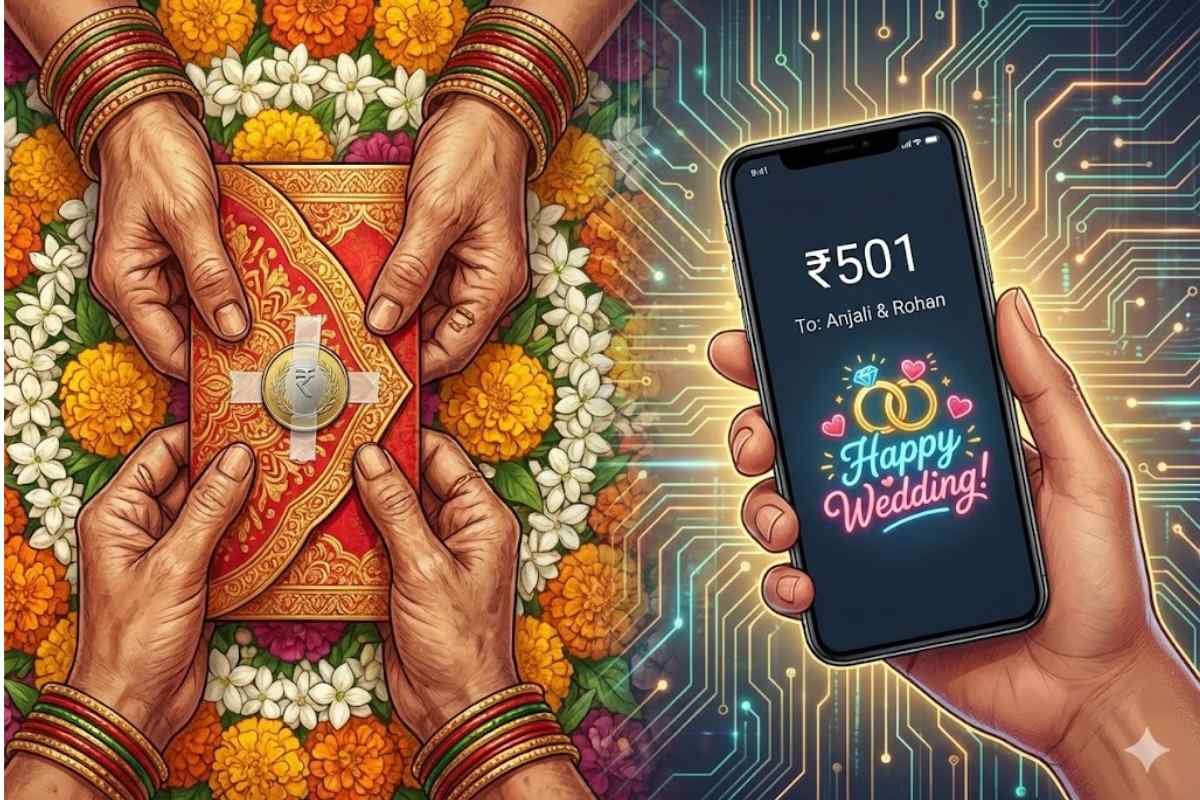
In the golden age of cash—which, let’s face it, was only about seven years ago—social financial transactions in India were an art form. They were wrapped in layers of tehzeeb (etiquette), lihaz (consideration), and a complex dance of refusal and acceptance. Remember the “lifafa” (envelope)? Handing over money at a wedding wasn’t just a transaction; it was a discreet transfer of blessings, always consisting of an odd number (₹101, ₹501) for good luck. Remember borrowing money from a friend? It was done in hushed tones, with a vague promise of “next week,” and the return was often rounded up as a gesture of gratitude.
Enter the Unified Payments Interface (UPI). It is fast, efficient, and brutally precise. It has turned our warm, fuzzy social exchanges into cold, hard data points. You can now request ₹12.50 from a friend for a chai. You can send a wedding gift of exactly ₹1,000 without the auspicious one rupee. While the technology is a marvel, it threatens to strip the soul out of our Lena-Dena (giving and taking) culture. We are in danger of becoming a society of accountants rather than a community of friends.
But culture is resilient. It adapts. We don’t need to throw away our traditions just because we threw away our wallets. We simply need an upgrade. Here are eight new rules of social etiquette to help you navigate the tricky waters of modern Indian relationships without losing your grace.
1. The Rule of the Auspicious ‘+1’ (The Digital Shagun)
The Tradition: In India, zero is the end, but one is the beginning. We never gave ₹500 as a gift; it was always ₹501. That extra rupee signified continuity and growth.
The UPI Faux Pas: Transferring exactly ₹500 or ₹1,000 for a birthday or wedding gift because it’s a “round figure.”
The New Etiquette: Always, always add the extra rupee, or better yet, ₹11 or ₹51. When you type in ₹501 in the amount box, you are signaling that this isn’t a bill payment; it’s a shagun. It tells the receiver, “I remember our culture, even if the machine doesn’t.” It turns a digital transfer into a digital blessing.
2. The ‘Request Money’ Button is the Nuclear Option
The Tradition: Asking for money back was a delicate dance. You’d drop hints, wait for a private moment, or sometimes, just let it go for the sake of the friendship.
The UPI Faux Pas: Spamming your friend with a “Request Money” notification for ₹200 while they are at work or on a date. It feels like a slap in the face. It’s aggressive, impersonal, and transactional.
The New Etiquette: Use your words first. A gentle WhatsApp message—”Hey, just settling accounts for the weekend, whenever you’re free”—is infinitely more polite than a robotic payment demand. Reserve the “Request” button for strangers or strictly business transactions. For friends, trust their memory (or a gentle nudge) over the app’s aggression.
3. The Art of Rounding Up (Killing the Decimal)
The Tradition: “Keep the change.” If you owed a friend ₹92, you gave them a ₹100 note and refused to take the ₹8 back. It was a micro-gesture of generosity.
The UPI Faux Pas: Splitting a bill and sending your friend exactly ₹143.25. Nothing screams “penny-pincher” louder than sending 25 paise digitally.
The New Etiquette: Kill the decimal. If your share is ₹143.25, send ₹150. If it’s ₹92, send ₹100. The few extra rupees you lose are the price of maintaining dignity and warmth in the relationship. It signals that you value the person more than the precision of the math.
4. The ‘Digital Lifafa’ Note
The Tradition: The envelope wasn’t just a container; it was a canvas. We wrote names, blessings, and “With Love” on the back.
The UPI Faux Pas: Leaving the “Add a Note” section blank, or worse, writing “Food” or “Debt.”
The New Etiquette: The “Note” or “Remarks” section in GPay or PhonePe is your new lifafa. Use it. Don’t just send money; send a message. Write “Happy Anniversary! Have a drink on us,” or “For the delicious dinner, thank you!” This context transforms the transaction from a cold balance transfer into a warm social interaction.
5. Preserve the ‘Mehmaan-Nawazi’ (Hospitality)
The Tradition: Fighting for the bill is the national sport of India. The host pays. The guest protests. The host wins. It’s a display of dil (heart).
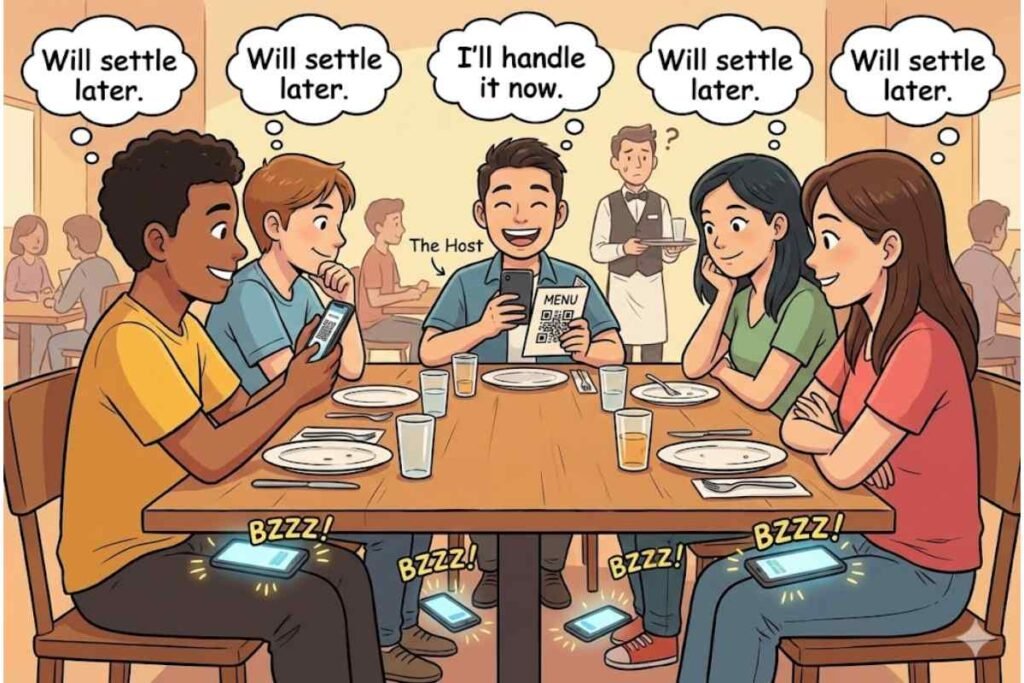
The UPI Faux Pas: Sitting at a dinner table and calculating the split on a calculator app while the waiter watches, then asking everyone to transfer their share right there.
The New Etiquette: One person pays the bill gracefully at the table. The “Hisab-Kitaab” (accounting) happens later, privately, in a group chat. Do not turn the dinner table into an accounting firm. Preserve the illusion of hospitality in the moment; handle the logistics in the background.
6. The ‘Small Debt’ Amnesia
The Tradition: Small amounts—₹10, ₹20, a cup of chai—were often forgotten or absorbed into the flow of friendship. “Arre, chalta hai” (It’s okay) was the motto.
The UPI Faux Pas: Sending a request for ₹15 because you paid for a chai.
The New Etiquette: Just because you can track every rupee doesn’t mean you should. Reinstate the “Small Debt Amnesia.” Let the small things go. Trust that the universe (and your friend) will balance the scales eventually. If you are the one paying for chai today, assume your friend will pay next time. Don’t digitize the pettiness.
7. Respecting the Domestic Staff
The Tradition: Paying the maid, driver, or press-wala was a monthly interaction. It often involved a small chat and checking in on their family.
The UPI Faux Pas: Treating their salary like an electricity bill—a silent, scheduled transfer with zero interaction.
The New Etiquette: UPI is a blessing for domestic staff (it builds their credit history), but don’t let it replace the relationship. When you transfer their salary, tell them you’ve done it. “Didi, salary bhej di hai.” And occasionally, round it up or add a small bonus randomly with a note. It replaces the “baksheesh” culture with something more dignified but equally generous.
8. The Privacy of Wealth (Nazar Na Lage)
The Tradition: We were taught not to flash cash. Wealth was private.
The UPI Faux Pas: Leaving your phone screen open with your bank balance visible, or sharing screenshots of large transactions in groups to show off.
The New Etiquette: Digital modesty. Be discreet about your transactions. Just because the transfer is invisible doesn’t mean the bragging should be visible. In a country where financial disparity is huge, flaunting digital wealth is just as crass as flashing a wad of notes.
Conclusion: Technology Changes, ‘Tehzeeb’ Shouldn’t
The transition to UPI is a one-way street; we are never going back to cash. But we must remember that money in India has never been just a medium of exchange; it is a medium of relationship. It carries the weight of our obligations, our affections, and our social standing.
By adopting these simple rules, we can ensure that while our economy becomes digital, our society remains human. We can have the speed of the silicon chip and the warmth of the earthen pot. So, the next time you tap ‘Pay’, take a second to add that extra rupee, write that kind note, and remember: the app processes the payment, but you process the relationship.
Call to Action:
Have you encountered a “UPI miser” who asks for ₹12 back? Or have you found a cute way to send digital gifts? Share your stories of modern Lena-Dena in the comments below. Let’s write the new rulebook together. Follow IndiLogs for more insights on navigating the new India with old-school wisdom.