Table of Contents
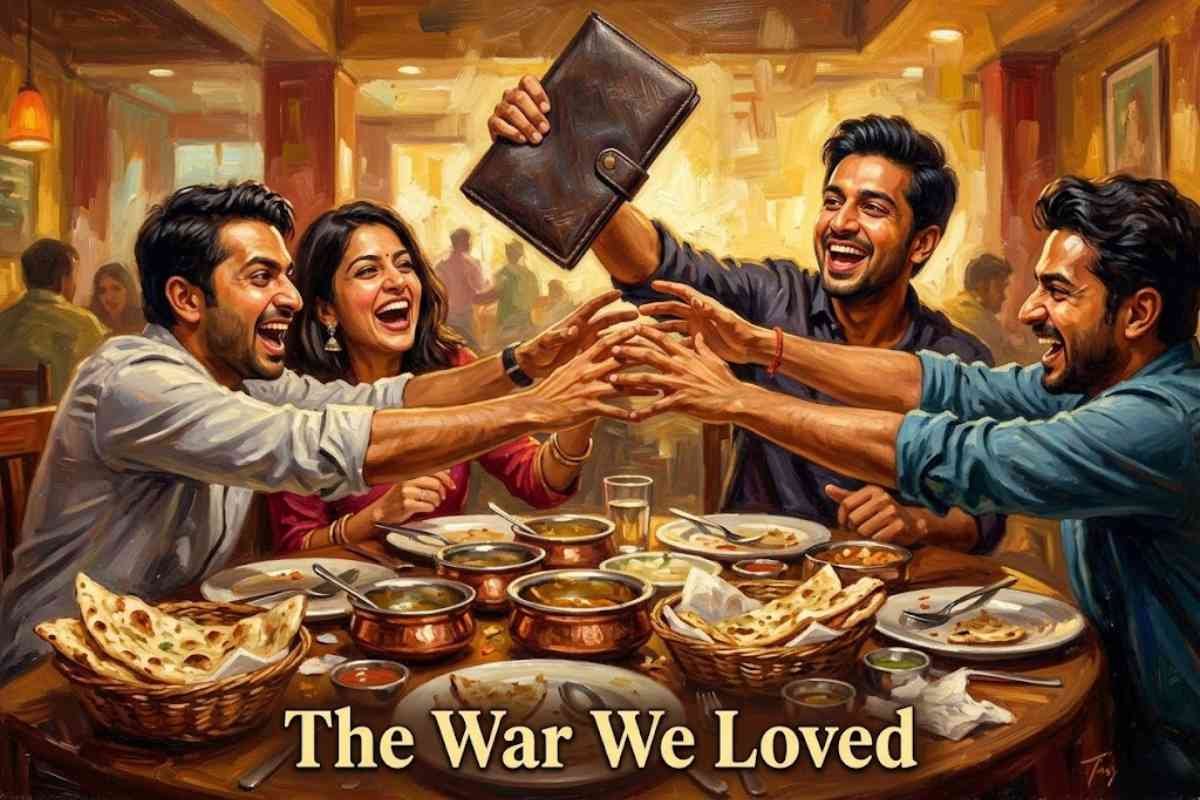
There was a time, not so long ago, when paying a restaurant bill in India was a contact sport. It was a theatrical performance of love, ego, and generosity. As the waiter approached with the little leather folder, hands would shoot out from all corners of the table. “Tu rakh!” (You keep it away!) one would shout. “Aaj meri baari hai!” (It’s my turn today!) another would yell, physically blocking the first person’s wallet. It was a chaotic, loud, and beautiful wrestling match where the winner was the one who lost money. It was inefficient, sure. But it was the glue of Indian friendship.
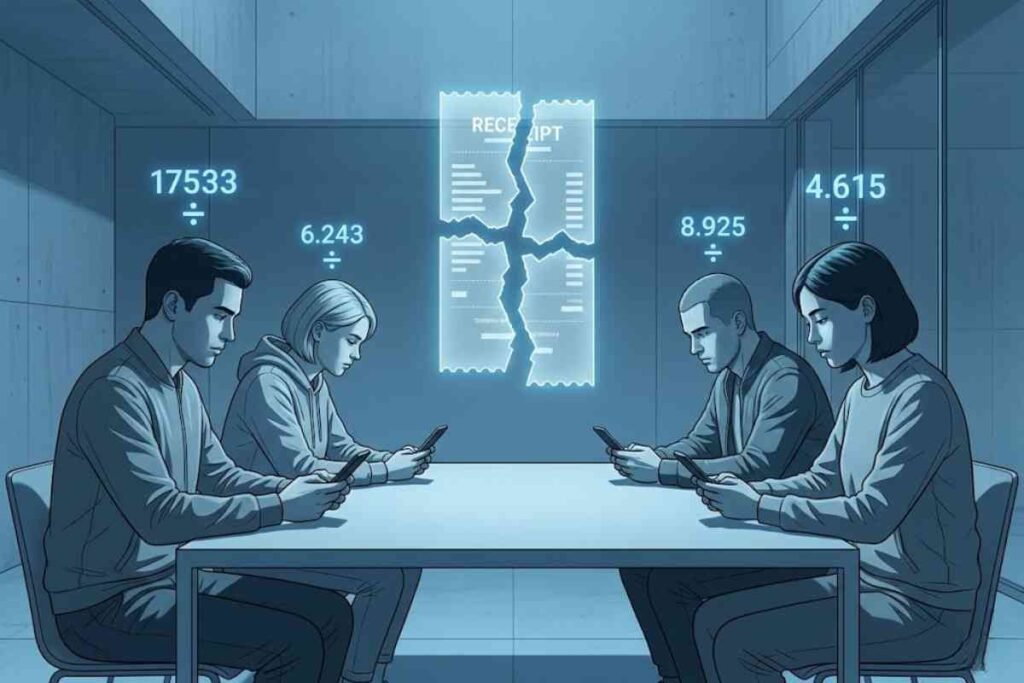
Today, that scene is dying. The waiter drops the bill. Silence descends. One person—usually the self-appointed “Auditor” of the group—calmly picks it up and says, “I’ll pay, I’ll Splitwise it.” Heads nod in unison. Phones are unlocked. Within seconds, a notification pings on everyone’s device: “You owe Rahul ₹437.50.” No wrestling. No generosity. Just cold, hard, mathematical precision.
The Unified Payments Interface (UPI) and its integrated bill-splitting features have undoubtedly made life easier, but in the process, they have fundamentally altered the DNA of Indian friendships. We have traded warmth for efficiency, and the social cost is higher than we think. Here are the seven ways this digital ledger is destroying our friendship etiquette.
1. The Death of the “Karma Cycle” of Reciprocity
In the pre-UPI era, friendship economics ran on a loose, unwritten system of karmic debt. If I paid for the movie tickets today, there was a silent understanding that you would get dinner next time, or maybe the time after that. We didn’t keep score; we kept faith. This cycle ensured that we had to meet again to balance the scales. It created a loop of continuous interaction.
The UPI Effect: Instant settlement breaks this loop. When you pay me back ₹300 for the movie ticket five minutes after the show starts, the transaction is closed. The debt is cleared. There is no lingering obligation to meet again, no excuse to say, “Arre, next time!” We have turned relationships into a series of one-off transactions rather than a continuous flow of give-and-take.
2. The Tyranny of the Micro-Split
There used to be a threshold for debt. Asking a friend for anything less than ₹100 was considered petty. “Chalta hai” (It’s okay/let it be) was the motto for small expenses like auto fares or chai.
The UPI Effect: The friction of asking for money is gone. Because it takes zero effort to send a request for ₹15, people do it. We have normalized the micro-split. We see friends splitting a ₹40 bill for two cups of tea. We see requests for ₹12 for a shared auto ride. This granularity erodes the concept of yaari (friendship) and replaces it with hisaab-kitaab (accounting). When you ask a friend for ₹12, you aren’t being frugal; you are signaling that your friendship isn’t worth a rounding error.
3. The End of the “Bill Fight” Theatre
As mentioned, the fight for the bill was a signal of dominance, affection, and hospitality. Winning the fight meant you cared for your friends. Losing meant you were loved. It was a validation ritual.
The UPI Effect: The “Bill Fight” is now seen as an annoyance. If someone tries to pay the whole bill, they are often met with, “Don’t be a hero, just split it.” The emotional weight of the gesture is stripped away. The person who pays is no longer a generous host; they are just a temporary payment gateway provider, waiting to be reimbursed. The romance of the gesture is dead.
4. The “Itemized” Friendship
Remember sharing? You ordered a Butter Chicken, I ordered a Dal Makhani, and we both ate everything. We split the bill down the middle because we shared the experience, not just the calories.
The UPI Effect: Apps now allow for itemized splitting. “I didn’t have the naan, I only had the roti, so my share is ₹40 less.” “You had two beers, I had one Coke.” This forensic auditing of a fun night out sucks the joy out of the room. Instead of savouring the memory of the laughter, we end the night staring at receipts, calculating who ate the last piece of paneer. We aren’t breaking bread together; we are negotiating a contract.
5. The Passive-Aggressive Notification
Asking for money back in person is awkward. It requires tone, context, and a bit of courage. It forces you to gauge if the other person is struggling financially.
The UPI Effect: The app does the dirty work. It sends a robotic, cold notification: “Reminder: Settle up.” It’s passive-aggressive by design. It creates anxiety in the receiver and removes empathy from the requester. You might be sending that reminder while your friend is having a terrible day, but the app doesn’t care. It turns friends into debt collectors without the human decency of a conversation.
6. The Vanishing ‘Treat’ Culture
In India, a birthday, a promotion, or even a new car meant one thing: a treat. “Party kahan hai?” was the national greeting. The expectation was that the celebrant pays.
The UPI Effect: The “Dutch Treat” (everyone pays for themselves) is creeping in, disguised as convenience. Because it’s so easy to split, the onus of the treat is diluting. We see birthday dinners where the cake is paid for by the birthday boy, but the dinner bill is split six ways on UPI. The grand gesture of hosting is being replaced by the pragmatic logic of “everyone pays their share.” It’s fair, perhaps, but it’s terribly dry.
7. Trust vs. Verification
The ultimate foundation of friendship is trust. “He’ll pay me back” was a statement of belief in the person’s character.
The UPI Effect: The immediacy of UPI implies a lack of trust. “Pay me now” suggests “I don’t trust you to remember later.” We are prioritizing financial hygiene over emotional security. We are verifying before we trust. The ledger on the phone has become more reliable than the word of the friend sitting across from us.
Conclusion: Bring Back the Chaos
UPI is a technological marvel. For flatmates sharing rent or colleagues on a business trip, it is a godsend. But for close friends, it is a vibe killer. We have allowed the efficiency of a payment system to dictate the norms of our social lives.
We need to reclaim the inefficiency. We need to bring back the chaos of the bill fight. We need to let go of the ₹20 debt. We need to say, “Next time,” and mean it. Because in the end, looking back at your life, you won’t remember the time you successfully split a bill to the last decimal point. You’ll remember the times someone slapped your hand away from a wallet and said, “Chup kar, aaj main deta hoon.” (Shut up, I’m paying today.) That is the currency of friendship; everything else is just math.
Call to Action:
Are you the “Auditor” of your group, or the one who misses the old days? Tag that friend who sends you a request for ₹15 in the comments below! Let’s debate: is UPI saving friendships or ruining them? Follow IndiLogs for more deep dives into the changing soul of India.