Remember the beautiful, chaotic symphony of preparing for a major Indian festival? The frantic pre-Diwali cleaning, the hunt for that one specific ingredient for a festive sweet, the family debates over the most auspicious muhurat for the puja, and the annual mystery of “how did Dadi make that intricate rangoli pattern again?” For generations, these traditions have been passed down through observation, oral instruction, and a healthy dose of last-minute panic. But today, a new, unexpected assistant has entered the ritual space: the smartphone.
A wave of “tech rituals” is quietly transforming how Indians celebrate. Far from the dystopian fear that technology would erode tradition, we are witnessing a quintessentially Indian phenomenon of jugaad and adaptation. A host of mobile applications, designed specifically for our festivals, are not replacing ancient practices but enhancing them, making them more accessible, organized, and shareable for a new, digitally-native generation. Let’s explore how the digital panditji in your pocket is upgrading, not uprooting, our most cherished celebrations.
The App Store as a Puja Shop: A New Era of Preparation
The biggest impact of technology is in the logistical Olympics that precedes every festival. These apps are the new digital checklists, ensuring nothing is missed in the happy chaos.
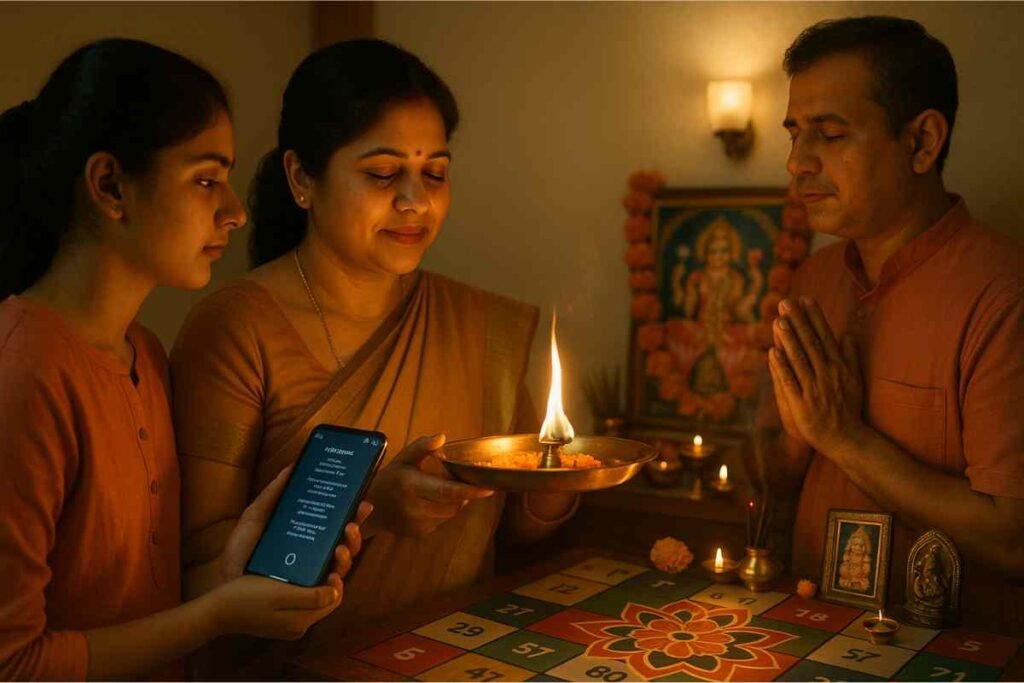
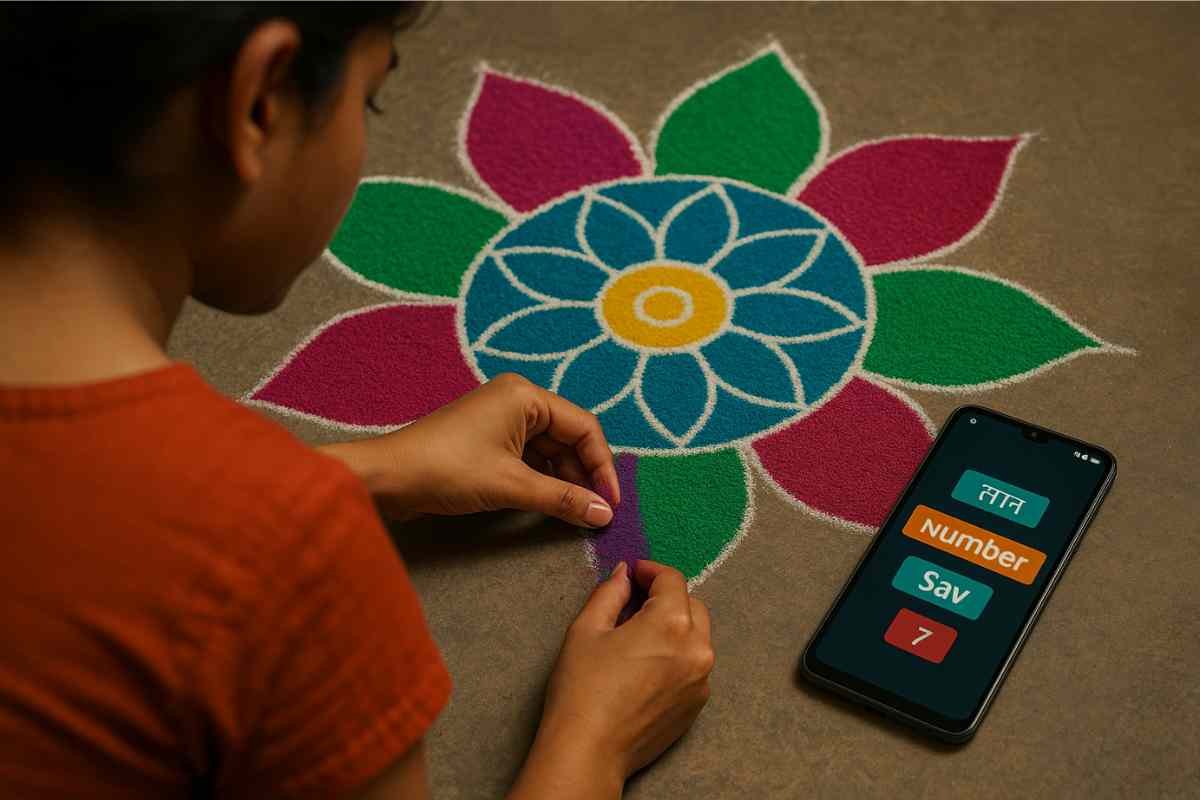
- The Diwali Decorator’s Assistant: Preparing for the festival of lights is a massive undertaking. Now, instead of flipping through old magazines, you have apps offering thousands of Rangoli and Kolam designs, from simple stencils for beginners to complex patterns for the pros. There are apps for home decoration ideas, DIY tutorials for making lanterns (kandils), and even checklists for the mammoth task of Diwali safai (cleaning).
- The Pandal Hopper’s Guide: During Navratri or Durga Puja, finding the best pandals (temporary shrines) or the liveliest garba nights used to rely on word-of-mouth. Today, apps provide pandal locators, complete with maps, photos, and user reviews, turning the traditional pandal hop into a streamlined, city-wide adventure.
- The Visarjan Traffic Controller: The Ganesh Visarjan crowdsourcing,is a brilliant example of tech solving a real-world problem. Imagine apps that use user-generated data and GPS to show real-time crowd density at different immersion points (ghats). This allows families to choose less crowded routes and times, making the poignant farewell to Ganpati safer and more manageable. It’s a cosmic traffic report for the divine procession.
The Digital Guru: Getting the Rituals Right
One of the biggest anxieties for younger generations or the diaspora is performing complex rituals correctly. Technology has stepped in to become the ultimate, patient guru.
- The Pocket Panditji (Puja Vidhi Apps): Don’t know the step-by-step process for Lakshmi Puja? There’s an app for that. These apps provide a complete puja vidhi, often with audio recordings of mantras, explanations of the significance of each ritual, and a list of all required items (samagri). It democratizes ritual knowledge, empowering individuals to perform ceremonies with confidence, without having to rely solely on the availability of a priest or a knowledgeable elder.
- The Cosmic Clock (Panchang & Muhurat Apps): The importance of auspicious timing (shubh muhurat) is paramount. What used to require consulting a thick, complex almanac (Panchang) or a family astrologer can now be done instantly. Apps provide precise timings for everything from the main puja to lighting the first diya, ensuring traditions are followed with astronomical accuracy.
- The Bhajan Library: Need the lyrics and tune for a specific aarti or bhajan? Apps offer vast libraries of devotional music, with lyrics in multiple languages, turning your phone into a portable prayer book and choir, ensuring everyone can sing along, even if they’re a bit off-key.
Connecting the Dots: Enhancing, Not Replacing
This is the crucial distinction. These apps are not performing the rituals for us. They are tools that facilitate a richer, more informed, and less stressful human experience.
- The rangoli app provides the design, but your hands still have to create the art at the doorstep.
- The puja app provides the mantra, but your voice has to chant it with devotion.
- The pandal locator helps you find the goddess, but your feet have to make the journey, and your eyes have to take in the darshan.
Technology, in this context, is a bridge, not a destination. It helps a busy professional in Mumbai perform a tradition with the same accuracy as their grandmother in a village. It allows a family in California to connect with their roots by following the same rituals as their relatives in Delhi. It helps manage the practical challenges of modern urban life while keeping the spiritual core of the festival intact.
Of course, the risk of distraction is real. The temptation to check notifications during an aarti is a uniquely modern challenge. But on the whole, this fusion represents a vibrant evolution. It shows tradition not as a fragile relic, but as a resilient, adaptable system, capable of co-opting the tools of the modern world to ensure its own survival and relevance.
So, the next time you see someone using their phone to select a rangoli pattern or play an aarti, don’t see it as a loss of tradition. See it as tradition doing what it has always done best: evolving, adapting, and finding new ways to thrive in the hearts and homes of the next generation.
What festival apps have you used? How has technology changed the way your family celebrates? Share your experiences in the comments below! If this piece gave you a new perspective on tech and tradition, please share it on WhatsApp, Facebook, and Twitter!


1 comment
[…] don’t have to observe every single festival or ritual with equal fervor. The “all-or-nothing” approach leads to burnout and […]