Table of Contents
The guilt creeps in silently. It arrives when you realize your child knows more about Marvel superheroes than the Pandavas. It whispers when you order a pizza for a festival because making an elaborate traditional meal felt too overwhelming after a long work week. It stings when you struggle to explain the “why” behind a ritual you’ve followed your whole life but never fully understood. For millions of urban and diaspora Indians, this tension is real. We live modern, fast-paced lives, often disconnected from the traditional joint family and community structures that once seamlessly transmitted culture from one generation to the next.
How do we keep our rich, vibrant heritage alive amidst the relentless demands of contemporary life? How do we ensure our culture doesn’t become a dusty relic in our minds, a collection of half-remembered stories and obligations? The answer isn’t to perfectly replicate the past – that’s impossible and impractical. The answer lies in smart, intentional, and joyful adaptation. Here are seven practical strategies to preserve your Indian culture while living a modern lifestyle.

1. Curate, Don’t Hoard: Prioritize What Truly Matters to You
You don’t have to observe every single festival or ritual with equal fervor. The “all-or-nothing” approach leads to burnout and guilt.
- The Strategy: Pick a few traditions that genuinely resonate with you and your family. Go deep on these, and be okay with simplifying the rest.
- How to Do It: Maybe Diwali is your non-negotiable, all-out celebration, but you choose to mark other festivals with a simple puja and a special meal. Perhaps your family’s core tradition is a weekly shared meal without screens, or a monthly visit to a place of worship. By choosing what to prioritize, you transform cultural practice from a burdensome checklist into a source of genuine joy and connection.
2. Create ‘Ritual-Lite’: Adapt, Don’t Abandon
Elaborate, multi-day ceremonies can be daunting. The key is to distill the essence of the ritual into a manageable, modern form.
- The Strategy: Create simplified, “lite” versions of rituals that fit your schedule but retain their core meaning.
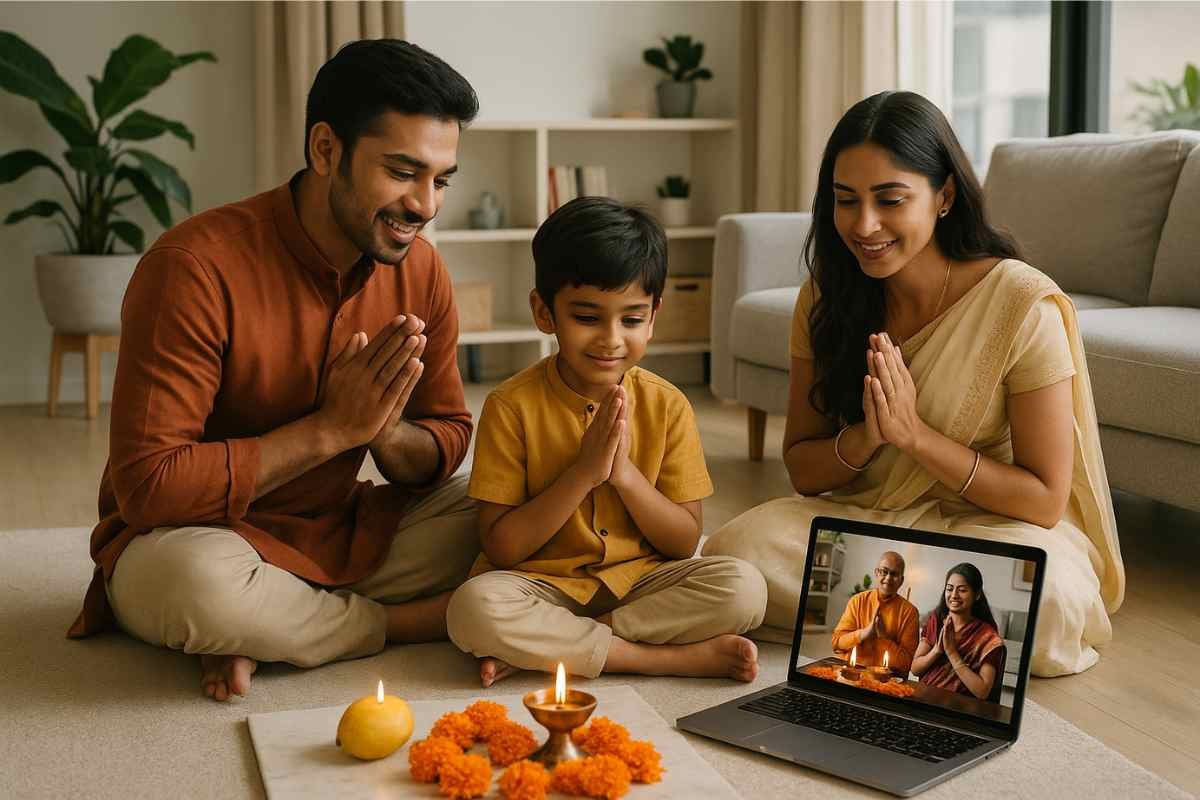
- How to Do It: Can’t do an elaborate 10-course Navratri meal? Focus on making one special dish and explaining its significance. Don’t have time for a full-length puja every morning? Create a 5-minute ritual: light a diya, offer a flower, and have a moment of quiet gratitude. This isn’t cultural dilution; it’s cultural adaptation, ensuring the tradition survives in a new context.
3. Use Your Phone as a ‘Panditji’: Tech as a Cultural Bridge
Technology is often blamed for cultural disconnection, but it can be a powerful tool for reconnection.
- The Strategy: Use apps, streaming services, and online communities to access cultural resources.
- How to Do It: Learn to cook a traditional dish from a YouTube tutorial by a grandmotherly expert. Use a puja app to understand the steps and mantras for a festival. Listen to podcasts on Indian history or philosophy during your commute. Join a WhatsApp or Facebook group for people from your region to share recipes and festival memories. Your phone can be your link to language, music, stories, and community.
4. Build Your ‘Urban Village’: Create Your Own Community
In the absence of a traditional joint family or village, you have to build your own support system.
- The Strategy: Proactively connect with like-minded Indians in your city or neighbourhood.
- How to Do It: Organize a potluck for a festival with a few other families. Start a small book club to read Indian authors. Find a local class for a traditional art form, be it Carnatic music or Kathak. These chosen communities become your “urban village,” a space to celebrate and share cultural experiences, creating new support systems for a modern reality.
5. Explain, Don’t Enforce: The Art of Raising Culturally-Aware Kids
Forcing children to participate in rituals they don’t understand often backfires, creating resentment instead of connection.
- The Strategy: Shift the focus from rote participation to engaging explanation. Make it fun and relatable.
- How to Do It: Frame traditions as stories. Instead of just “light the diya,” explain it as “we’re bringing light and chasing away the darkness, like in the story of Ram and Sita.” Use children’s books, animated videos (like Amar Chitra Katha), and simple language. Ask them questions. Involve them in the fun parts – let them help make ladoos or choose the rangoli design. Your goal is to spark curiosity and positive association, not demand blind obedience.
6. Language Lite: Weave Your Mother Tongue into Daily Life
Losing your mother tongue can feel like losing a part of your identity. You don’t need to be a literary expert to keep it alive.
- The Strategy: Integrate your language into small, daily moments.
- How to Do It: Make a rule to only speak in your mother tongue during dinner. Watch a regional language movie together once a month. Use simple, everyday words and phrases with your children. Call your parents or relatives and make a conscious effort to converse in your language. Small, consistent efforts are more effective than sporadic, ambitious ones.
7. Celebrate ‘Your’ Way: Create New Traditions
The most powerful way to preserve culture is to make it your own.
- The Strategy: Create new family traditions that honor the spirit of the old ones.
- How to Do It: Maybe your new “Diwali tradition” is a family hike followed by making homemade pizza and lighting diyas. Perhaps your “Sankranti tradition” is a family kite-flying competition at a local park. These new rituals, created by you, hold personal meaning and are more likely to be cherished and passed on by your children. Culture is not a static museum piece; it evolves.
A Final Word on Guilt and Authenticity
It’s easy to feel guilty that you’re not “doing enough.” But it’s crucial to distinguish between cultural practice (the specific, observable actions) and cultural identity (the internal sense of belonging and connection). Your identity is not diminished because you performed a 5-minute puja instead of a 1-hour one.
Authenticity isn’t about perfectly replicating your grandparents’ life. It’s about making conscious, thoughtful choices that integrate the values and beauty of your heritage into your modern reality. Choose elements that add joy, meaning, and connection to your life, not just obligation. By curating, adapting, and innovating, you’re not diluting your culture; you are ensuring its survival. You are becoming an active, vital link in its long and ever-evolving story.
How do you balance modern life with cultural traditions? What are some ‘lite’ rituals or new traditions your family has created? Share your invaluable strategies in the comments below! And if this piece resonated with you, please share it with other modern Indians navigating this beautiful challenge!