Table of Contents
The word “networking” often conjures up images of sterile conference halls, forced smiles, and a frantic exchange of business cards. It can feel transactional, superficial, and exhausting. But what if there was a more authentic, more meaningful way to build powerful professional relationships?
Look no further than the vibrant, communal atmosphere of an Indian religious gathering. Whether it’s a weekly satsang, a community iftar during Ramzan, a langar at a Gurdwara, or a grand temple festival, these events are not just about spiritual solace; they are incredible, organic networking hubs.
Here, connections are not forced over canapés; they are forged through shared values, selfless service, and a sense of common purpose. The “spiritual networking” that happens in these spaces creates bonds of trust and mutual respect that can be far more resilient than any connection made at a conventional business event. By understanding the unwritten rules of engagement, you can learn to build relationships that are not just professionally advantageous, but personally enriching. Here are eight powerful techniques from the spiritual gathering playbook.
1. The “Seva” Principle (Connect Through Selfless Service)
At the Gathering: One of the most powerful ways to connect at a Gurdwara, temple, or community event is by participating in seva (selfless service). Whether it’s serving food at a langar, managing the shoe stand, or helping to clean up, working side-by-side with others breaks down barriers instantly. You are no longer a CEO or an intern; you are just two people united in a common, humble task.
The Professional Application: Find opportunities for collaborative, purpose-driven work outside of your core job. Volunteer for a company-wide social responsibility (CSR) initiative. Join a cross-departmental committee to organize an office event. Working together on a meaningful task that isn’t tied to your job titles builds camaraderie and reveals a person’s true character – their work ethic, their collaborative spirit – in a way that a formal meeting never can.
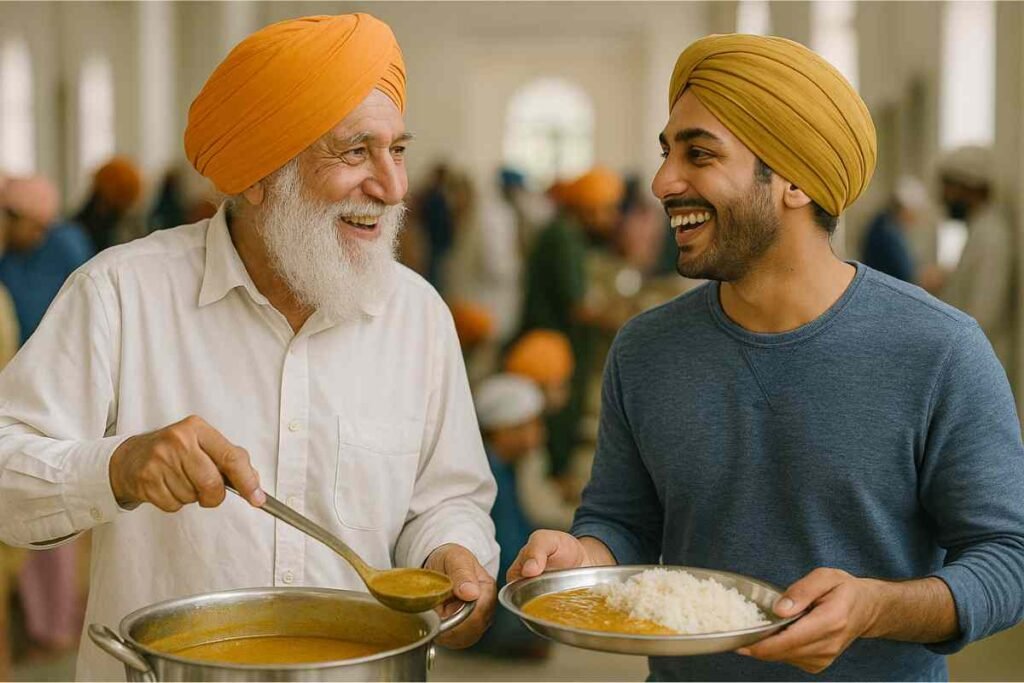
2. “Shared Values” as the Foundation (Connect on ‘Why’, Not ‘What’)
At the Gathering: People at a religious event are connected by a shared set of beliefs, values, and traditions. This spiritual common ground creates an immediate, deep-seated sense of trust and kinship. The conversation starts from a place of mutual understanding.
The Professional Application: Seek to understand a potential connection’s core values and motivations. Instead of asking, “What do you do?”, try asking questions that reveal their “why.” “What’s the most meaningful project you’ve ever worked on?” or “What are you most passionate about in your industry?” Connecting on the level of purpose and passion creates a much stronger and more memorable bond than simply discussing job descriptions.
3. The “Prasad” Approach (Give Without Expecting a Return)
At the Gathering: You are offered prasad (a blessed food offering) freely, with no expectation of anything in return. The act of giving is central to the spiritual experience.
The Professional Application: Adopt a “giver” mindset in your networking. How can you offer value to someone before you ever ask for anything? Can you share a helpful article, introduce them to someone in your network who could be a good connection for them, or offer a piece of advice? Networking becomes authentic and effective when your primary goal is to contribute to the relationship, not to extract value from it.
4. “Ditch the Pitch” (Embrace Authentic Conversation)
At the Gathering: No one is there to deliver an elevator pitch. Conversations are organic, personal, and unhurried. People talk about their families, their well-being, their community. The focus is on the human, not the professional.
The Professional Application: At networking events, stop “pitching” and start “conversing.” Be genuinely curious about the other person. Ask about their hobbies, their recent travels, their challenges. The best professional relationships often begin with a purely personal connection. People do business with people they like and trust, and that liking and trust is built through authentic human interaction, not a rehearsed sales script.
5. “Listen More, Speak Less” (The Art of Devotional Listening)
At the Gathering: A key part of any spiritual practice is listening – to a sermon, to a hymn (bhajan or kirtan), to the shared stories of fellow devotees. It’s an exercise in receptive, non-judgmental listening.
The Professional Application: Practice active, deep listening. When someone is talking, don’t just wait for your turn to speak. Listen to understand, not just to reply. Ask follow-up questions that show you’ve absorbed what they’ve said. In a world where everyone is broadcasting, being a truly great listener is a rare and highly valued skill that makes people feel respected and understood.
6. The “Power of Humility” (Leave Your Ego at the Door)
At the Gathering: In a place of worship, everyone is equal before the divine. Titles, designations, and worldly success are left at the door. This shared humility fosters a sense of equality and openness.
The Professional Application: Approach networking with humility. It doesn’t matter if you’re the senior VP or a fresh graduate; everyone has something to learn and something to offer. Be approachable, be willing to learn from everyone you meet, and treat everyone with the same level of respect. An arrogant, hierarchical attitude is the fastest way to kill a potential connection.
7. “Consistency and Presence” (The Power of Showing Up)
At the Gathering: The strongest community bonds are formed by those who show up regularly. Being a consistent, familiar face at the weekly service or the annual festival builds trust and recognition over time.
The Professional Application: Networking is a long-term game. It’s not about attending one big conference a year. It’s about consistently showing up in your professional community. Be active in your industry associations, attend local meetups, and regularly engage with your network online. Building a strong network is a marathon, not a sprint, and it requires consistent presence.
8. The “Blessing” Mindset (Wish Well for Others)
At the Gathering: A core tenet of any spiritual practice is to wish for the well-being of others (Sarbat da bhala, Lokah Samastah Sukhino Bhavantu). You pray not just for yourself, but for the entire community.
The Professional Application: Genuinely root for the success of others in your network. When a connection gets a promotion or launches a new venture, be the first to congratulate them sincerely. When you see an opportunity that isn’t right for you but is perfect for someone you know, pass it along. A reputation for being someone who lifts others up will make you a magnet for positive, high-quality connections.
The transactional, “what can you do for me?” approach to networking often leaves us feeling empty. The wisdom from our spiritual gatherings teaches us a better way. By focusing on service, shared values, genuine curiosity, and a giving mindset, we can build professional relationships that are not only more effective but also more aligned with our own sense of purpose and humanity. These connections, built on a foundation of trust and mutual respect, are the ones that will truly sustain and enrich our careers in the long run.



1 comment
[…] Strategy: Your first conversation after an introduction should be about building a connection. Your goal is not to ask for a job or a sale. Your goal is to have them walk away thinking, […]