Table of Contents
In the glittering narrative of ‘Startup India’, we worship at the altar of the billion-dollar valuation. We track funding rounds like cricket scores and celebrate founders on magazine covers. Yet, behind this dazzling facade of hustling entrepreneurs and unicorn dreams lies a fundamental, almost heretical, truth: our startup ecosystem is flying blind. For all the venture capital sloshing around, founders are missing the one resource more precious than cash—an accurate map of the very people they’re trying to serve.
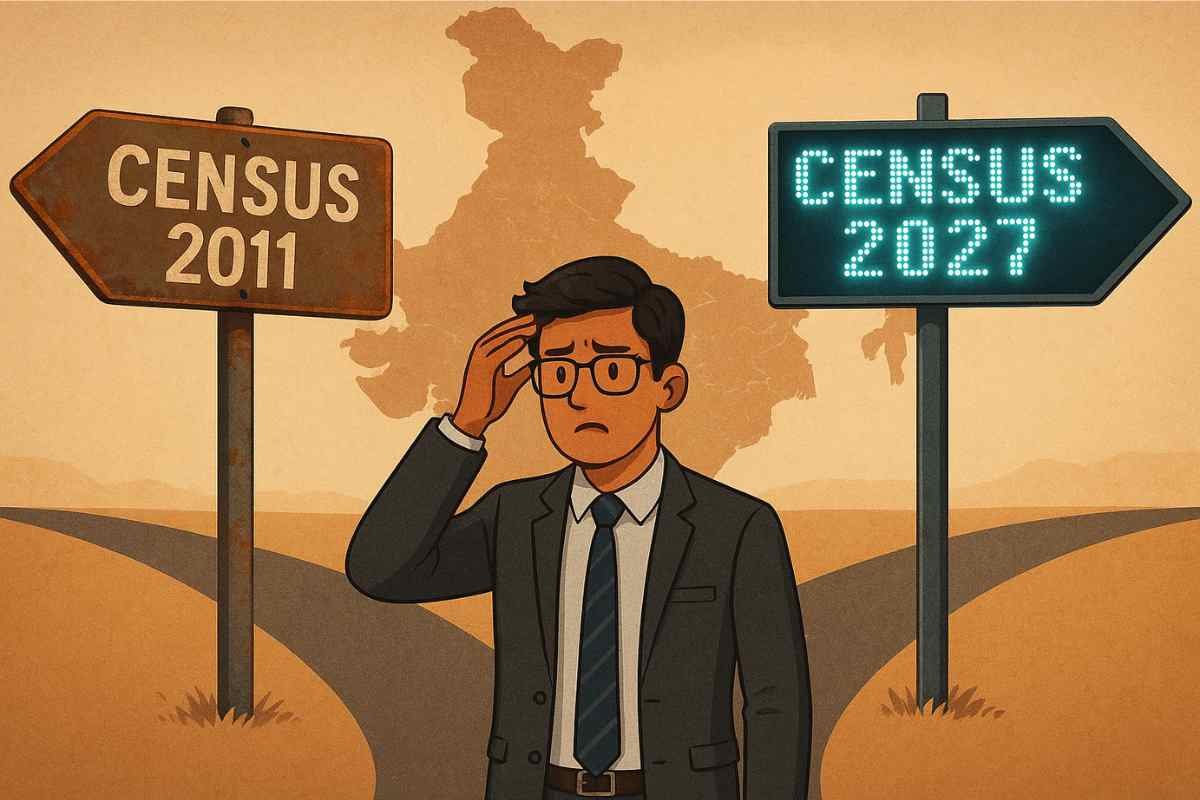
The colossal delay of the national Census has created a data black hole, forcing our brightest minds to navigate the world’s most complex market with a map from 2011, an era before Jio, before UPI, and before the very definition of ‘India’ was digitally redrawn.
The Entrepreneur’s Compass is Broken
Every B-school student learns about TAM, SAM, and SOM (Total, Serviceable, and Serviceable Obtainable Market). This isn’t just jargon; it’s the bedrock of any business plan. It’s how you convince an investor that your idea isn’t just a passion project but a viable, scalable enterprise. And the primary source for this bedrock in India? The Census.
Imagine you’re a chai-sipping entrepreneur with a brilliant idea for a D2C brand selling solar-powered lamps to rural households without reliable electricity. Your entire business model hinges on a few simple questions:
- Where are these households?
- How many are there?
- What is their likely income level?
In 2025, the only official, granular data you have to answer these questions is from 2011. In the 14 years since, entire villages have gotten connected to the grid, millions have migrated to cities, and household incomes have transformed. Basing your market size on 2011 data is like planning a trip from Delhi to Mumbai using a map that doesn’t show the Golden Quadrilateral. You’re not just inefficient; you’re destined to get lost.
This isn’t a niche problem. It affects every sector:
- Fintech: A startup building a micro-lending app for gig workers needs to know where these workers are concentrated. The 2011 Census has no meaningful data on the gig economy.
- Ed-Tech: An entrepreneur creating vernacular-language learning modules needs to know the current, on-the-ground linguistic distribution and literacy rates, not the decade-old numbers.
- Quick-Commerce: A company like Zepto or Blinkit needs hyper-local population density data to plan its dark stores. They are currently forced to use expensive proxy data, essentially making multi-crore bets on educated guesses.
The High Cost of Flying Blind
This data deficit isn’t a mere inconvenience; it’s a direct tax on innovation. It leads to a massive misallocation of capital, one of the scarcest resources in any economy. Startups are spending the first year of their existence and a significant chunk of their seed funding just trying to answer the basic questions the Census should provide for free.
“We burned through nearly 20% of our seed round on third-party market research reports,” a founder of a health-tech startup told me, on condition of anonymity. “They were wildly expensive and often contradicted each other. We were essentially paying people to make slightly better guesses than us. Fresh Census data would have been our single most valuable asset.”
This has given rise to an entire industry of ‘proxy data’ providers. They analyze everything from telecom subscriber data and FMCG sales figures to satellite imagery of nighttime lights to estimate population and economic activity. While clever, this is the epitome of Indian jugaad—a workaround for a broken system. These proxies are often biased. Telecom data misses those without phones. FMCG data only tracks consumption, not potential. They provide clues, but the Census provides the ground truth.
The Resilient Hustlers Who Made It Anyway
And yet, unicorns are born. Companies have scaled. This is a testament to the sheer grit and intuitive genius of the Indian entrepreneur. Founders of companies like Meesho, which cracked the complex world of social commerce in Tier-2 and Tier-3 India, didn’t start with a perfect dataset. They succeeded by having an almost spiritual connection to their user base. They went to the ground, talked to hundreds of potential customers, and built their own micro-census through relentless iteration and a sharp ear.
They succeeded despite the data gap, not because of it. Their journey was longer, more expensive, and far riskier than it needed to be. They proved that a deep understanding of the Indian consumer is the ultimate moat, but they had to dig that moat by hand, spoonful by spoonful. The success of these outliers only highlights the immense latent potential that a solid data foundation could unlock for the thousands of startups that follow.
The 2027 Gold Rush: What the New Map Will Reveal
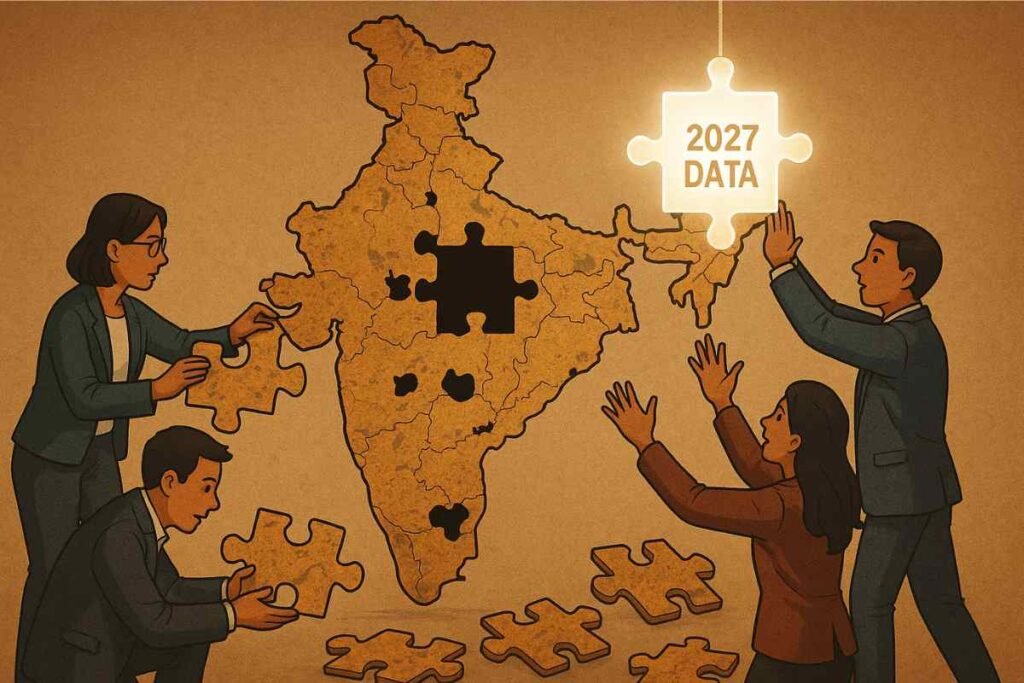
The release of the Census 2027 data will be like a light being switched on in a dark room. For the data-driven entrepreneur, it will trigger a gold rush. For the first time, we will have a clear, high-resolution picture of the post-Jio, post-COVID ‘New India’.
- New Markets Unearthed: The data will reveal hidden pockets of affluence and demand in previously overlooked towns and districts. Imagine discovering a cluster of a million upwardly mobile young people that no one was targeting effectively.
- The Gig Economy Mapped: We will finally have a credible estimate of India’s gig and creator economy, allowing startups to build services tailored to this massive, emerging workforce.
- Migration and Urbanization Redefined: The new migration data will redraw the map of urban India, showing the rise of new satellite towns and suburban clusters—prime territory for real estate tech, D2C brands, and logistics companies.
- Smarter, Leaner Ventures: The next wave of entrepreneurs will be able to build their business plans on a foundation of fact, not assumption. This will lead to more efficient use of capital, faster product-market fit, and a higher probability of building sustainable businesses, not just cash-burning machines.
The ancient texts speak of the importance of Sankhya, or knowledge through enumeration, as a path to understanding reality. In the modern context, the Census is the ultimate Sankhya for our economy. Venture capital provides the fuel, but the Census provides the navigation system. And as any good driver knows, you can have a full tank of petrol, but without a map, you’re just going in circles.
The entrepreneurs of tomorrow aren’t just waiting for the next funding winter to end; they’re waiting for the data drought to break. The 2027 Census isn’t a bureaucratic chore. It is the single most important document for the future of Indian innovation.
Are you an entrepreneur who has struggled with the data black hole? Share this article and your story. Let’s highlight why national data is the bedrock of a true Startup Nation.