Table of Contents
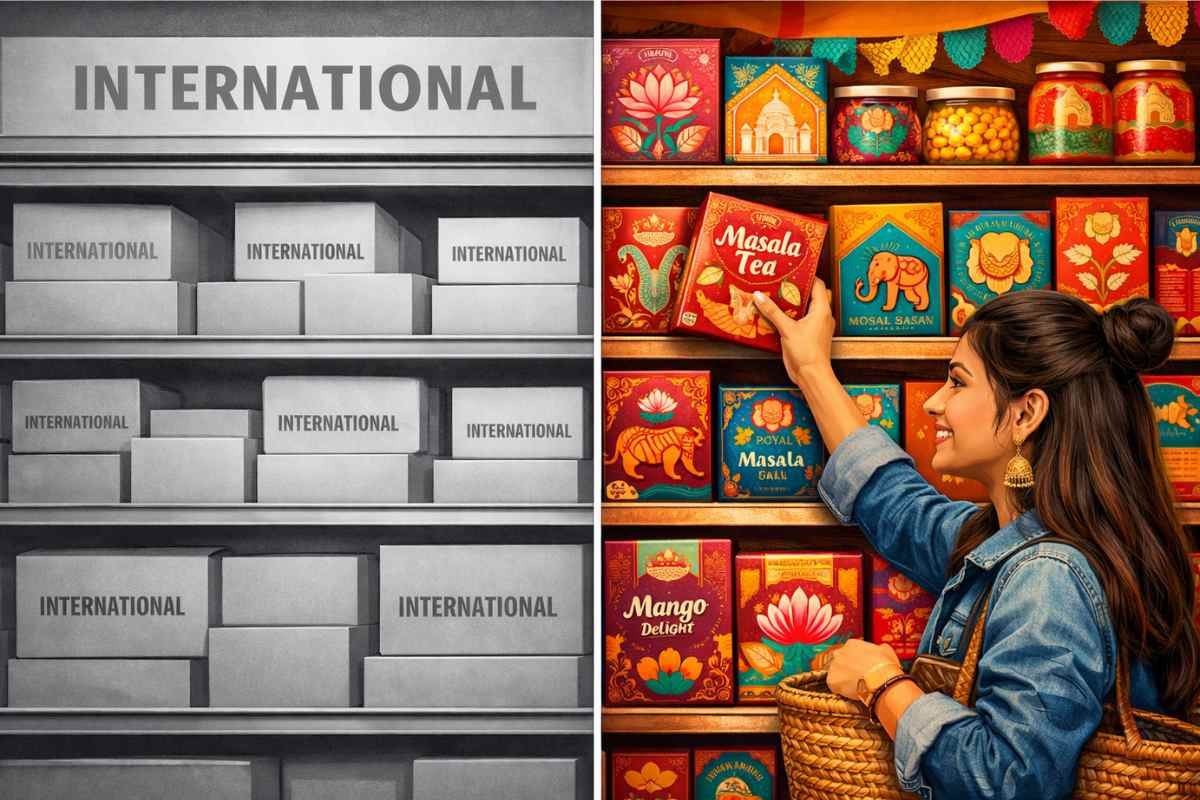
In the 1990s, the ultimate status symbol for an Indian middle-class family was a box of “Imported” chocolates or a pair of sneakers brought by an uncle returning from the US. The “Foreign” label was a proxy for quality, trust, and aspiration. The unspoken consensus was clear: if it was Western, it was better. If it was Indian, it was a compromise.
Fast forward to 2025. The script has not just flipped; it has been rewritten entirely. Today, a Gen-Z consumer in Bengaluru is just as likely to flaunt a boAt smartwatch as an Apple Watch. A skincare enthusiast in Delhi prefers the Ayurvedic science of Forest Essentials over the chemical formulations of L’Oreal. The “colonial hangover” that plagued Indian consumerism is dissipating, replaced by a fierce, confident wave of “Swadeshi 2.0.”
With India’s economy projected to grow at 6.2% in FY25 and the government pouring INR 11.2 trillion into infrastructure, the stage is set for home-grown champions. But beating global giants isn’t about blind nationalism; it’s about smart positioning. It’s about convincing the Indian consumer that you aren’t just the “cheaper alternative,” but the “better, more relevant alternative.” Here is how to position your startup as India’s answer to the world.

1. Solve for the ‘Indian Context’ (The Product Moat)
Global brands build for the global average. They design for the straight roads of America or the 24/7 power supply of Europe. Indian brands win when they design for Indian chaos.
The Strategy: Position your product as the one that “gets” India.
- The Example: When Uber entered India, it required credit cards. Ola understood that India runs on cash and launched cash payments immediately. That was a positioning masterstroke. It said, “We know how you pay.”
- The Playbook: Highlight features that tackle specific Indian pain points that global competitors ignore. Does your EV handle monsoon waterlogging better than a Tesla? Does your map app navigate narrow gullies better than Google? Your positioning line should be: “They built it for the world. We built it for you.”
2. Swadeshi 2.0: Modern, Not Medieval
For a long time, “Swadeshi” branding felt dusty, Gandhian, and resistant to technology. Swadeshi 2.0 is different. It is slick, modern, and unapologetically premium. It combines Indian heritage with world-class aesthetics.
The Strategy: Don’t sell “tradition” as charity; sell it as “ancient wisdom meets modern science.”
- The Example: Mamaearth and Kama Ayurveda took ingredients like turmeric and kumkumadi—things we associated with grandma’s messy kitchen remedies—and packaged them in slick, convenient, Instagram-worthy bottles. They positioned themselves not as “old-fashioned,” but as “time-tested.”
- The Playbook: Your visual identity must be global standard. If your packaging looks cheap, the “Made in India” tag will hurt you. But if your packaging is world-class, the “Made in India” tag becomes a badge of pride. Position your brand as: “Indian Roots, Global Standards.”
3. The ‘Paisa Vasool’ Paradigm (Value, Not Cheap)
There is a massive difference between “cheap” and “value for money.” Indians love the latter. We don’t mind spending ₹1 Lakh, but we want to know we are getting ₹1.5 Lakh worth of value. Global brands often carry a “brand tax”—you pay for the logo.
The Strategy: Position your brand as the “Smart Choice.” Expose the “Brand Tax” of your global competitors.
- The Example: Zudio (by Tata) is crushing global fast fashion brands like H&M and Zara not just because it’s cheaper, but because the fashion is trendy and the price feels right for a garment you might only wear ten times. They understood the Indian youth’s desire for fast turnover in their wardrobe.
- The Playbook: Be transparent about your pricing. “Why pay ₹5000 for a logo when you can pay ₹1500 for the same fabric and better fit?” This appeals to the Indian intellect, making the customer feel savvy for choosing you.
4. Speak the Vernacular of Emotion
Global brands translate; Indian brands communicate. A multinational might translate “Just Do It” into Hindi, but it will lack soul. An Indian brand can tap into cultural nuances, festivals, and emotions that a foreigner simply cannot access.
The Strategy: Own the cultural calendar.
- The Example: Paper Boat drinks didn’t compete on “calories” or “vitamins” like Pepsi or Coke. They competed on “Memories.” They sold Aam Panna and Jaljeera by triggering nostalgia for Indian childhoods—school tiffins, summer holidays, and grandmother’s house. No global brand could ever own that emotional territory.
- The Playbook: Use cultural touchstones in your marketing. Don’t just celebrate Diwali; celebrate the specific nuances of a “Chhoti Diwali” or the chaos of cleaning the house. Position your brand as a member of the Indian family, not a guest in the house.
5. The ‘David vs. Goliath’ Narrative
Everyone loves an underdog, especially one that stands up to a bully. There is a growing sentiment of “Atmanirbhar Bharat” (Self-Reliant India). People want to see Indian companies win.
The Strategy: Be vulnerable and transparent about your fight.
- The Example: When MapmyIndia took on Google Maps, their CEO openly spoke about data sovereignty and how a foreign company shouldn’t own India’s geospatial data. It turned a tech choice into a patriotic choice.
- The Playbook: Frame your competition not as a business rivalry, but as a mission. “We are reclaiming this industry for India.” “Why should our data sit on servers in California?” This rallies the community around you.
6. Accessible Aspiration
Global brands often position themselves as “exclusive.” In a developing economy like India, “inclusive” growth is a more powerful narrative.
The Strategy: Democratize the luxury.
- The Example: Lenskart took eyewear—which was treated as a medical necessity or a luxury by global brands like Ray-Ban—and turned it into a fashion accessory accessible to the masses. They didn’t lower the style; they lowered the barrier to entry.
- The Playbook: Position yourself as the brand that “Unlock” a lifestyle for the common Indian. “The quality you deserve, at the price you can afford.”
The Time is Now
The moat of the global giants was always their capital and their brand equity. But capital is now available in India, and brand equity is shifting. The Indian consumer is no longer looking West for validation. They are looking in the mirror.
If you can build a product that respects their wallet, understands their context, and speaks to their soul, you won’t just be an “alternative” to a global brand. You will be the default choice. The era of “Imported is Best” is dead. Long live the “Indian Giant.”
Which Indian brand do you think has successfully beaten a global competitor? Was it Thums Up vs. Coke? Ola vs. Uber? Share your favourite ‘Swadeshi’ success story in the comments!