Table of Contents
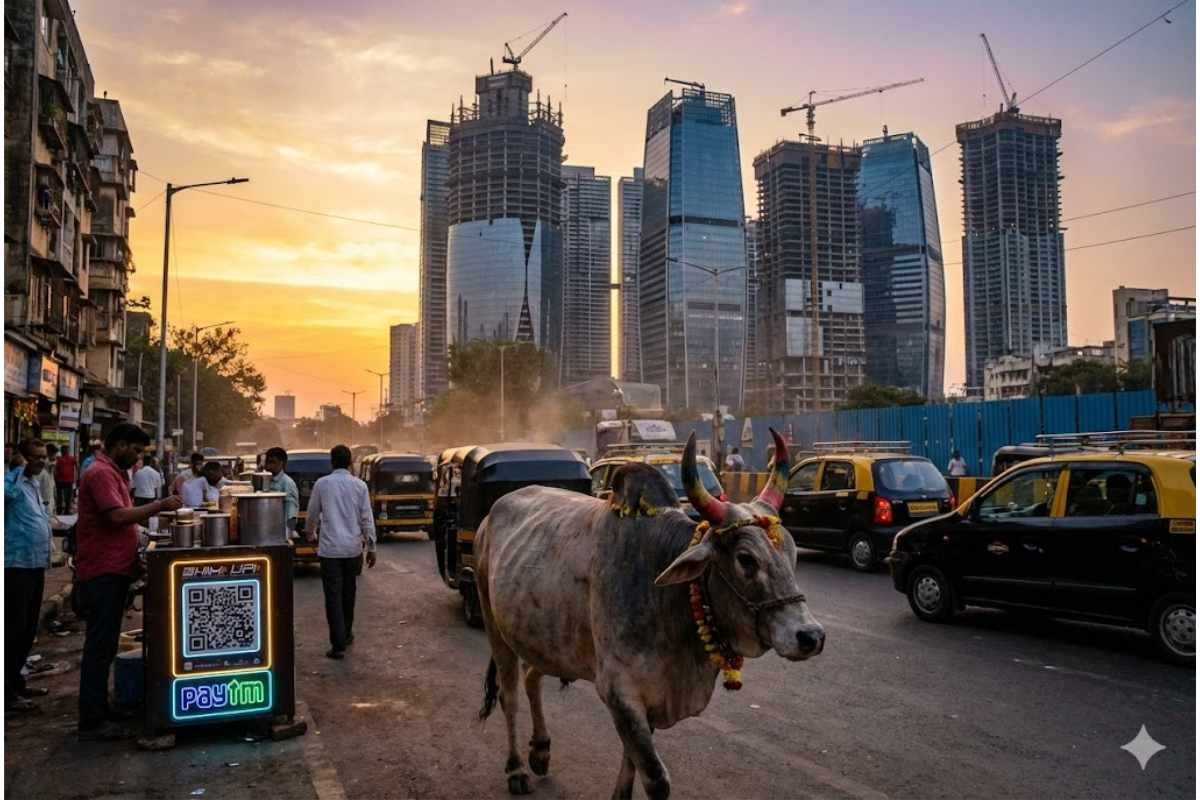
If you stand on a rooftop in Mumbai, Gurgaon, or Hyderabad today, the most common bird you’ll see isn’t a pigeon; it’s a construction crane. If you buy a tender coconut from a vendor in a remote village in Kerala, the sound you hear isn’t the rustle of cash, but the melodic ping of a payment box announcing, “Rs. 50 received on PhonePe.”
These aren’t just random anecdotes; they are the pulse of a giant waking up. While the Western world grapples with recession fears and aging populations, India is currently sitting on a powder keg of potential, waiting for the spark to turn into a full-blown economic explosion. The International Monetary Fund (IMF) and the World Bank can throw their percentages at us—estimating a robust GDP growth of 6.2% in FY25 and 6.3% in FY26—but you don’t need a PhD in Economics to feel the vibration on the ground. The “Amrit Kaal” isn’t just a slogan; it’s showing up in the order books of factories, the hiring sprees of startups, and the spending habits of the middle class.
However, recognizing the boom is the easy part. The hard part is positioning yourself to ride the wave rather than just watching it crash on the shore. As India cements its position as the fastest-growing major economy and aims to become an advanced nation by 2047, the window to capitalize on this trajectory is opening right now. Here are the 7 unmistakable signs that the Indian economy is about to explode, and the specific “dhanda” (business) moves you need to make to prepare.
1. The CAPEX Comet: INR 11.2 Trillion is Hitting the Ground
The most visible sign of a booming economy is usually concrete and steel. The Union Budget for FY26 has earmarked a staggering INR 11.2 trillion (approx. USD 134.5 billion) for capital expenditure. This isn’t money being printed for handouts; this is money being poured into asset creation—roads, railways, airports, and defense corridors.
When the government spends on infrastructure, it creates a “multiplier effect.” Every rupee spent on a bridge puts money in the hands of the steel manufacturer, the cement supplier, the truck driver, and the daily wage labourer. This money then circulates back into the economy as consumption.
- How to Prepare:
- Investors: Look beyond the glamorous tech stocks. The real alpha is in the “picks and shovels” of this gold rush—cement, steel, L&T-style EPC (Engineering, Procurement, and Construction) companies, and banking stocks that finance these projects.
- Business Owners: If you are in logistics or B2B supply, align your distribution networks along the new dedicated freight corridors.
2. The ‘China Plus One’ Reality Check
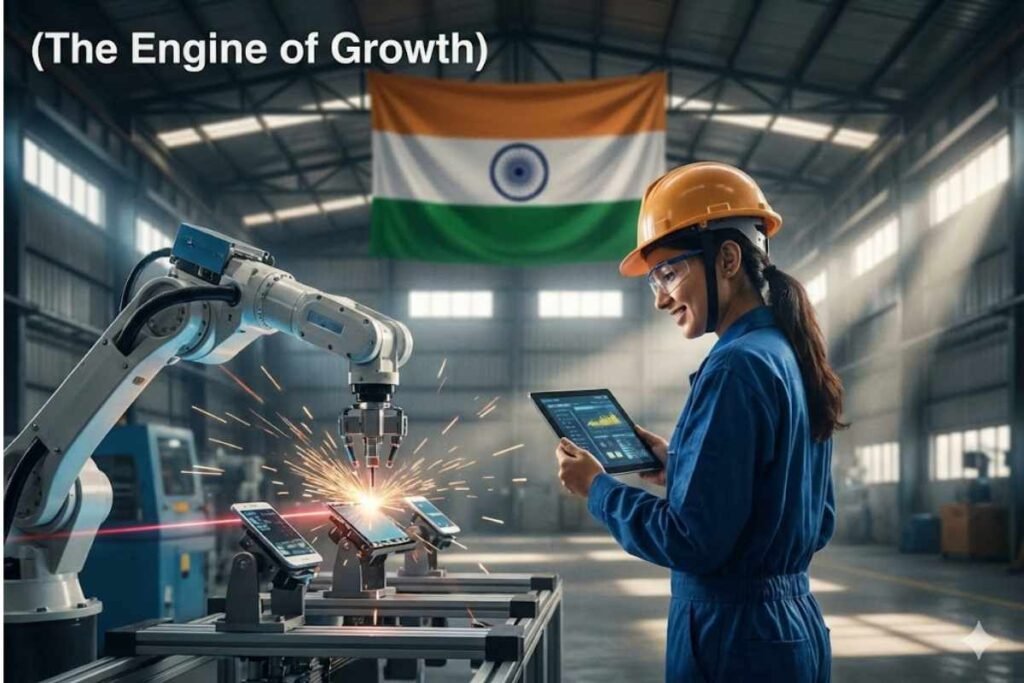
For years, “Make in India” was a vision. Today, it is a geopolitical necessity. Global giants are nervous about keeping all their manufacturing eggs in the Chinese basket. India, with its PLI (Production Linked Incentive) schemes and a massive labour pool, is the only viable alternative at scale. We are seeing this with Apple assembling iPhones in Tamil Nadu and semiconductor plants breaking ground in Gujarat. The manufacturing sector is expanding sharply, driven by this shift in global supply chains.
- How to Prepare:
- Professionals: The “Factory Manager” is the new “Software Engineer.” Upskill in modern manufacturing technologies like IoT, robotics, and supply chain management. The salaries in high-end manufacturing are catching up to IT.
- Entrepreneurs: Don’t try to build the final iPhone. Build the component ecosystem. There is a massive vacuum in precision engineering and component manufacturing for these global giants.
3. The Return of the ‘Rural Roar’
After a few tepid years, rural demand is spiking. This is a critical indicator because 65% of India still lives in villages. When the farmer buys a new tractor or a two-wheeler, the Indian economy truly fires on all cylinders. A sustained drop in inflation is leaving more disposable income in the pockets of rural India, leading to a resurgence in FMCG and entry-level vehicle sales.
- How to Prepare:
- Investors: Track the “Two-Wheeler Index.” It is often the sharpest proxy for rural health. Stocks of companies that sell tractors, fertilizers, and affordable consumer goods are prime candidates for a portfolio.
- Marketers: Stop obsessing over English copy for South Delhi. The next billion dollars of consumption will happen in Bhojpuri, Marathi, and Telugu. Regional language marketing is your gateway to this boom.
4. The Digital Moat: DPI is the New Oil
India has built something no other country has: a Digital Public Infrastructure (DPI) that works at a billion-person scale. UPI, Aadhaar, and now ONDC (Open Network for Digital Commerce) have created a friction-free economy. We process more real-time digital payments than the US, China, and Europe combined. This digitization has formalized the economy, bringing millions of small merchants into the credit system.
- How to Prepare:
- Business Owners: Get on ONDC. It democratizes e-commerce, allowing a small shop in Jaipur to sell to a customer in Kochi without paying a 30% commission to a platform aggregator.
- Fintech: The opportunity is now in “Credit on UPI.” Lending to the previously “un-lendable” based on their digital cash flow (not collateral) is the next big frontier.
5. Fiscal Fitness: The Deficit is Shrinking
For decades, India was plagued by a “twin balance sheet problem”—banks were broke, and the corporate sector was over-leveraged. That is history. Corporate India has deleveraged and is sitting on cash. Banks have their cleanest loan books in a decade. Furthermore, tax revenue is hitting record highs, helping shrink the fiscal deficit. A fiscally fit government means a stable currency and lower interest rates eventually—music to the ears of foreign investors.
- How to Prepare:
- Home Buyers: With interest rates likely to stabilize or dip as inflation cools, the real estate cycle is turning. If you are sitting on the fence for a home purchase, the “wait and watch” period is over.
- Investors: Financial services (Banks/NBFCs) are the biggest beneficiaries of a clean balance sheet cycle. They are the engines that will fund the 6.3% growth.
6. The Startup Ecosystem Grows Up
We are witnessing a shift from “Growth at all costs” to “Profitability at all costs.” India’s startup ecosystem, the third largest in the world, is maturing. We are seeing fewer wild cash burns and more IPOs. The focus on deregulation and the National Single Window System is making it easier to do business, attracting a more serious class of Foreign Direct Investment (FDI) that looks for long-term value, not just quick exits.
- How to Prepare:
- Job Seekers: Be wary of startups offering inflated salaries with zero path to profit. Look for “Camels” (startups that can survive droughts/downturns) rather than “Unicorns.” Ask about unit economics in your interview.
- Angel Investors: The valuations have rationalized. It’s a great time to enter early-stage investing if you have the appetite for risk, as you aren’t paying the 2021 bubble premiums.
7. The Demographic Dividend is Paying Out
While China, Japan, and Europe are aging, India is young. We have the largest working-age population in the world. This isn’t just a workforce; it’s a consumption engine. Young people buy houses, cars, travel, and consume content. This “youth bulge” will drive domestic demand for the next two decades, insulating India from global slowdowns.
- How to Prepare:
- Entrepreneurs: Build for the “Gen Z” of Tier-2 India. Their aspirations are global, but their wallets are local. Affordable luxury, travel, and experiences (cafes, gaming) are booming sectors.
The Action Plan: Don’t Just Watch the Fireworks
The signs are there. The “CAPEX Comet” is visible, the rural demand is roaring, and the digital rails are laid. But a booming economy doesn’t automatically mean a booming bank account for you. You have to participate.
If you are an investor, stop trying to time the market. The long-term trajectory is up. Start your SIPs (Systematic Investment Plans) in diversified funds that track the India story (Infra + Banking + Consumption).
If you are a professional, stop fearing AI and start using it to become hyper-productive. The manufacturing and specialized tech sectors are hungry for talent.
If you are an entrepreneur, stop looking at Silicon Valley for ideas. Look at the problems in your own backyard—logistics, clean water, affordable housing. The solutions to Indian problems will create the next Tata or Reliance.
The Indian economy is about to explode. The fuse is lit. The only question is: Are you standing close enough to feel the warmth, or are you too far away to even hear the bang?
Do you feel the economic shift in your industry? Which of these 7 signs are you betting your money on? Share your strategy in the comments below!