Table of Contents
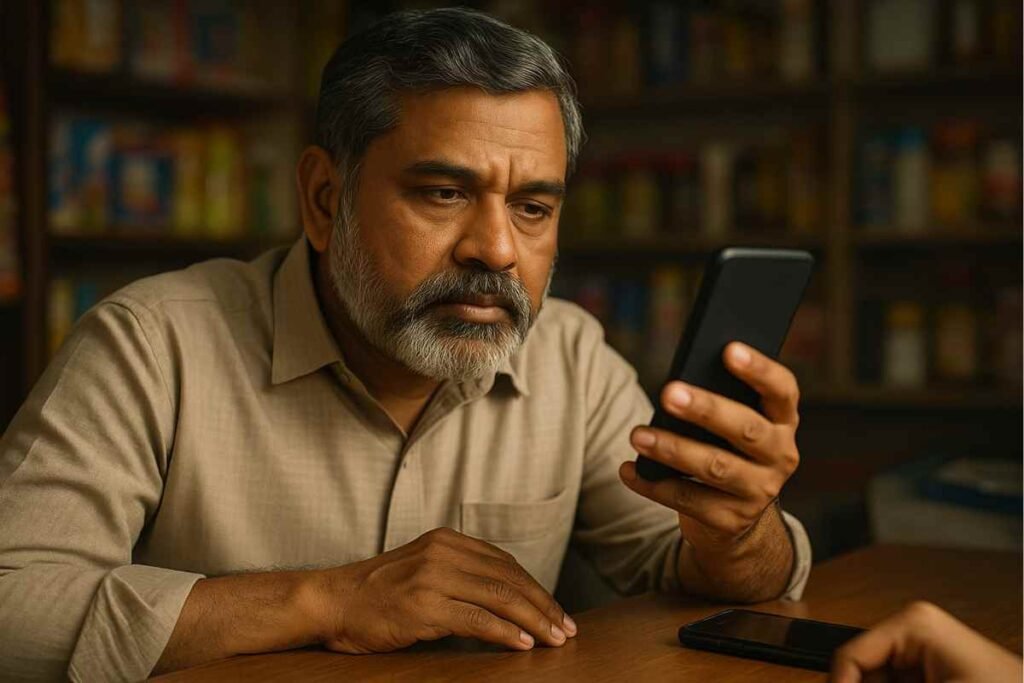
The lunchtime rush is a chaotic symphony. The sizzle of the fryer, the chatter of customers, the clatter of plates. In the middle of it all, you, the Indian shopkeeper, are the conductor. A customer buys a samosa and a chai. “UPI kar raha hoon, bhaiya,” he says. He taps his phone and flashes a screen at you for two seconds. It says “Payment Successful.” You nod, and he’s gone. It’s only later, when you’re tallying the accounts, that you realize the money never came. You’ve just been hit by the silent, insidious plague of the modern Indian marketplace: the fake UPI payment screenshot.
This isn’t just a financial loss; it’s a violation of bharosa (trust), the very currency our economy runs on. But in this digital age, the ancient wisdom of being cautious is more important than ever. These new-age con artists are clever, but they aren’t foolproof. Here are six forensic tricks that fraudsters absolutely hate, designed to turn you from a potential victim into a digital detective.
The Anatomy of a Digital Dhoka (Deception)
Before we get to the tricks, understand the scammer’s strategy. They rely on two things: the speed of your business and the social pressure of the moment. They know you’re busy. They know you don’t want to hold up the line. The flash of the screen is designed to be so quick that you accept it on faith. Their weapon is a simple screenshot, or worse, a pre-made template from an app that mimics the real payment screen. Our job is to break that flow and look for the cracks in their digital illusion.
Here are the six forensic checks to add to your arsenal:
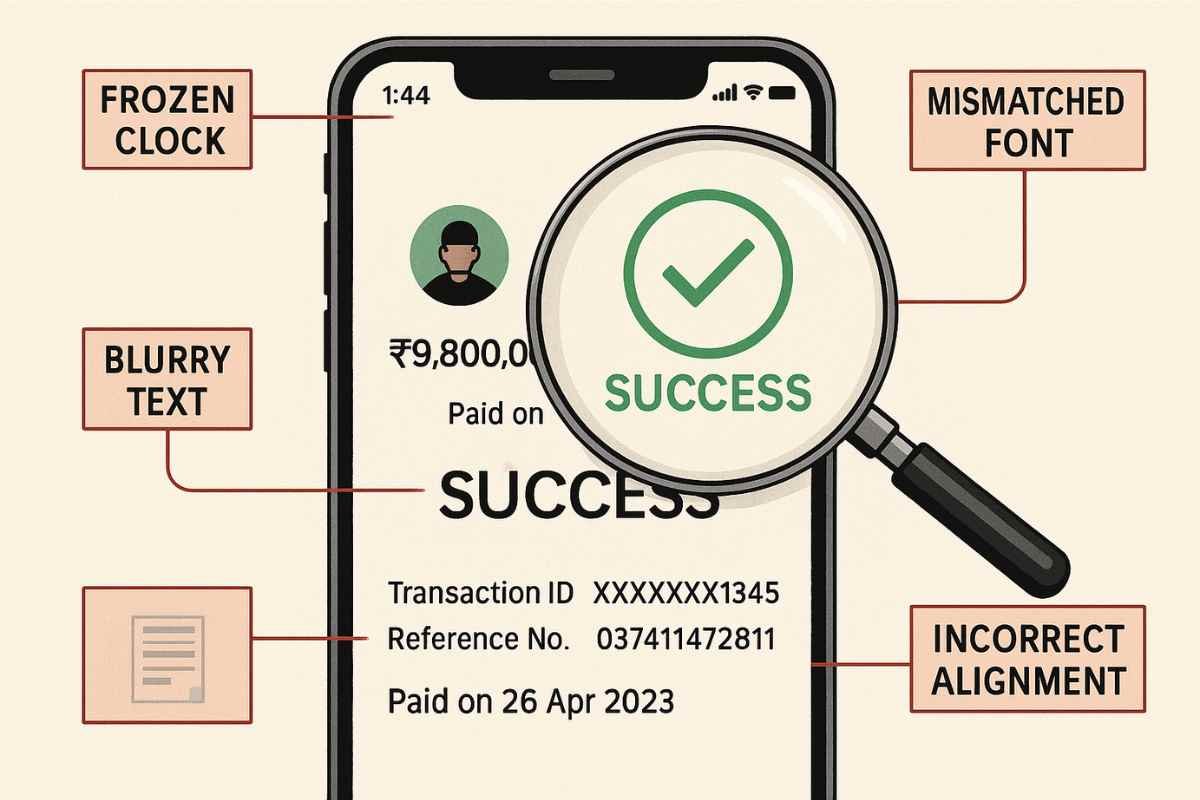
1. The Clock is Ticking (Literally)
The Trick: Look at the time and the battery percentage on the screenshot. A real payment confirmation screen is a live app screen. The phone’s clock should be ticking in real-time, and the battery icon should match the actual phone.
Forensic Analysis: Fake screenshots are static images. The scammer might have taken it hours ago or downloaded it from a shady app. The time on the screenshot will be frozen. If the time on the top of their screen says 1:15 PM but you know it’s now 1:20 PM, you’ve caught them. It’s the simplest, most devastating giveaway. Ask them to pull down the notification bar. On a real app, the live time will be visible. On a screenshot, it won’t work.
2. The Dead Giveaway of a Still Image
The Trick: A real UPI app screen is alive with subtle animations. The fake one is as dead as a rock.
Forensic Analysis: When a payment is successful on apps like GPay or PhonePe, there are often subtle, celebratory animations—a checkmark that ticks, a little sparkle effect. These are impossible to replicate in a static screenshot. Ask the customer to simply tap the screen. If it’s a fake image, nothing will happen, or it might zoom in awkwardly. If it’s a real app, tapping might reveal other UI elements or simply do nothing, but it won’t behave like a picture in a photo gallery. This lack of “life” is a huge red flag.
3. The Font Forgery & Alignment Flaws
The Trick: Scammers using editing apps are fraudsters, not graphic designers. They often get the small details wrong.
Forensic Analysis: Put on your detective hat and look closely at the text. Is the font for the amount paid exactly the same as the font for the date? Is the alignment of the text slightly off? Official UPI apps are designed by high-paid professionals; their user interface is pixel-perfect. Fake payment apps or edited screenshots often have minor but noticeable errors. The spacing between letters might be weird, the rupee symbol (₹) might look slightly different, or the text might be a shade too bold or too blurry. These fraudsters aren’t exactly digital Picassos.
4. The Ultimate Weapon: Your Own Notification
The Trick: The single greatest proof of payment is not on their phone; it’s on yours.
Forensic Analysis: This is the Brahmastra in your fight against fraud. Always, always, always trust your own device. The final confirmation is the SMS alert from your bank or the in-app notification on your own business UPI app. A common trick is for the scammer to show you their screen and then quickly exit before you can check your own device. Don’t fall for it. Politely say, “Ek minute, bhaiya, main check kar leta hoon.” (One minute, brother, let me check). A genuine customer will have no problem waiting three seconds for your confirmation. A fraudster will often become agitated or try to create a distraction.
5. The Sound of Money: Trust Your Ears
The Trick: Technology has given us a powerful, audible weapon. Use it.
Forensic Analysis: This is where services like the Paytm Soundbox or PhonePe for Business speaker have become a shopkeeper’s best friend. These devices announce the payment out loud, for everyone to hear: “Paytm par ₹50 prapt hue.” (Received ₹50 on Paytm). There is no faking this. It’s a public declaration of a successful transaction. If you don’t have one, consider getting one. It’s a small investment for complete peace of mind. It removes you from the awkward position of having to inspect a customer’s phone and makes the confirmation process transparent and automatic.
6. The Transaction ID Deep Dive
The Trick: For larger transactions, go beyond the confirmation screen. Ask for the details.
Forensic Analysis: Every successful UPI transaction has a unique Transaction ID (often called a UTR number). A simple “Payment Successful” screen can be faked, but the detailed transaction page behind it is much harder to replicate. If you’re dealing with a large payment and feel suspicious, politely ask the customer, “Sir, can you just tap on the transaction and show me the details page with the UTR number?” A scammer will almost never have this. A real customer can pull it up in two seconds.
Conclusion: Your Counter is Your Kingdom
UPI is a gift. It has empowered millions of small businesses and made our economy more dynamic. But every great tool can be misused. In this new digital age, your dharma as a business owner is to be as smart as the technology you use.
Don’t let the pressure of a busy day compromise your security. The two extra seconds you take to verify a payment are worth infinitely more than the money you could lose. Combine these forensic tricks with your own sharp intuition—the gut feeling that has helped Indian entrepreneurs thrive for centuries. Your counter is your kingdom; defend it with wisdom. Stay sharp, stay safe, and stay successful.
Call to Action:
Have you ever encountered a fake UPI screenshot? What are your own tricks for staying safe? Share your experiences and advice in the comments below. Knowledge is power. Let’s help each other build a more secure digital India. Forward this article to every shopkeeper you know, and follow IndiLogs for more practical insights into the Indian business world.