Table of Contents
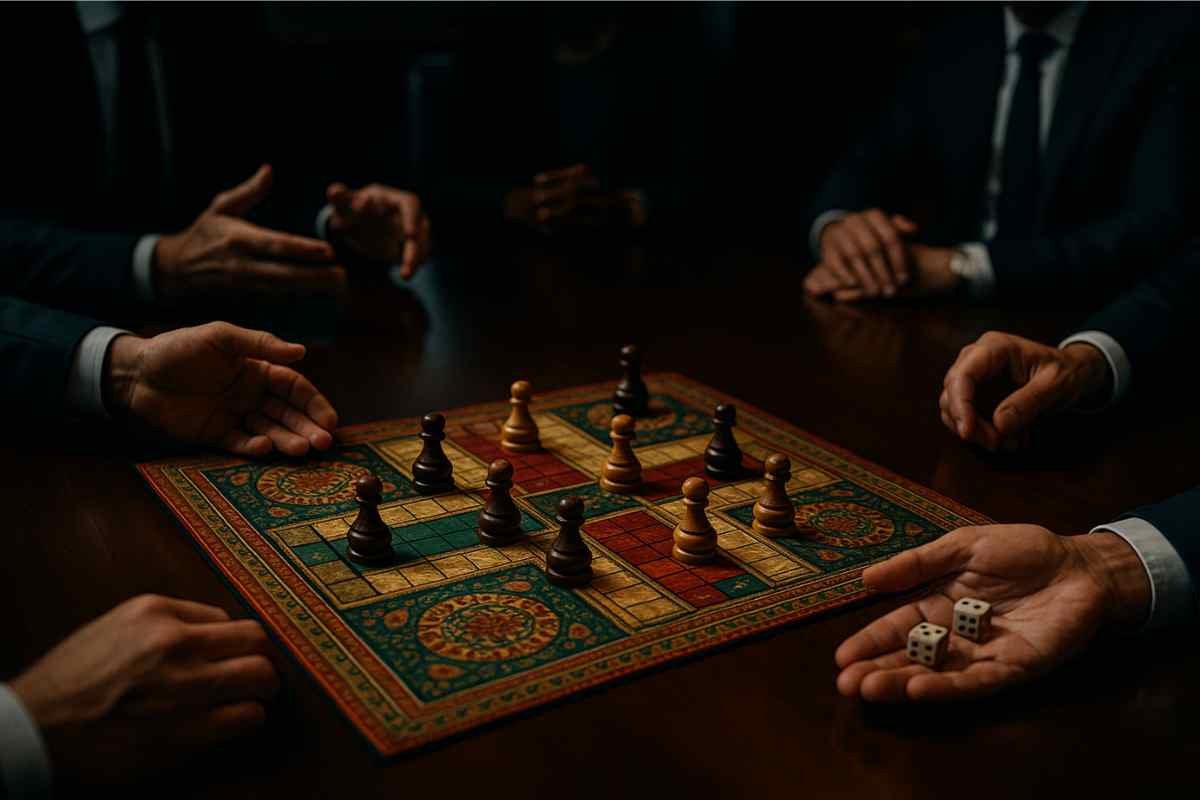
The air in the conference room is thick enough to cut with a knife. On one side sits the patriarch, his face a stony mask of disapproval. Across from him, his foreign-educated son, bristling with new ideas and undisguised frustration. The daughter, who runs operations with an iron fist, exchanges a weary glance with her uncle, the silent finance head who has seen this drama unfold a thousand times. This isn’t just a board meeting; it’s a battlefield of egos, resentments, and unspoken histories. Millions in revenue are on the line, but the real stakes are family.
Now, what if, instead of opening a spreadsheet, they unrolled a cloth board? What if, before a single agenda item was discussed, they broke into two teams and played a round of Pachisi? It sounds radical, perhaps even frivolous. But this isn’t a call for playtime. It’s a strategic proposal to deploy one of ancient India’s most potent psychological tools to solve the modern family business’s most intractable problem: itself. Starting a meeting with Pachisi, or its many regional variants like Pagade or Chausar, isn’t an escape from reality. It’s a way to diagnose it in a safe, rule-bound space before it derails your empire.
The Game as a Mirror: Surfacing Hidden Dynamics
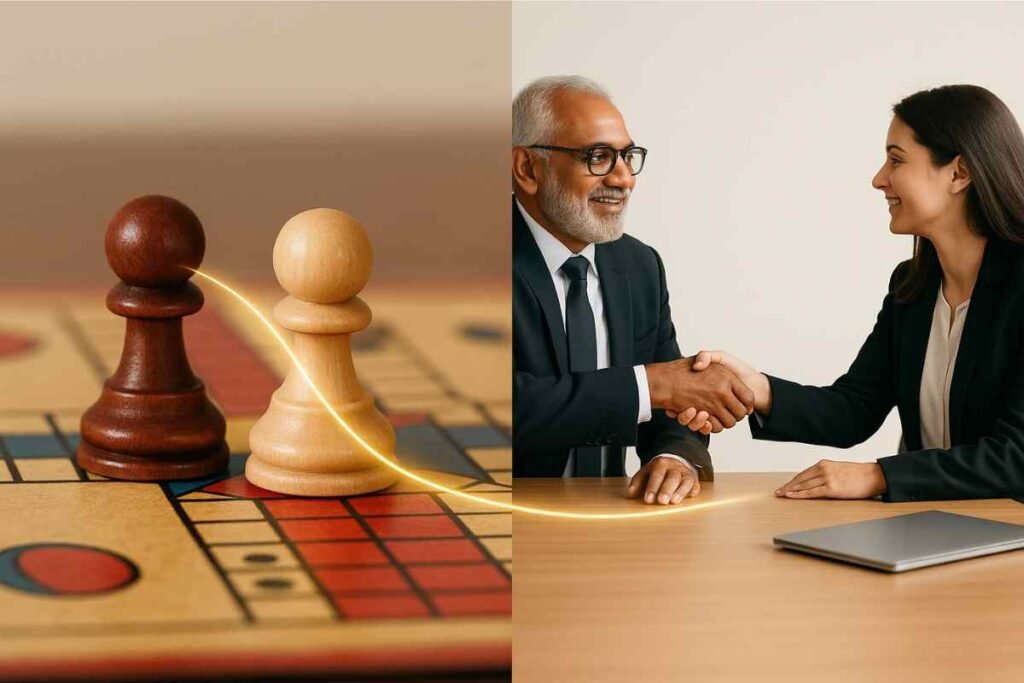
Pachisi, often called the “national game of India,” is a masterpiece of game design, far more complex than its Western derivative, Ludo. Played in teams of two, its brilliance lies in the delicate dance between individual ambition and shared destiny. You have your own pieces to get home, but your victory is inextricably linked to your partner’s success. Sound familiar? It’s the very essence of a family business.
This is where the game becomes a powerful diagnostic tool:
- The Aggressive Player: Who immediately goes for the opponent’s pieces (gotis), even at great risk to their own? This is likely the risk-taker, the one pushing for aggressive expansion, perhaps without considering the defensive needs of the company.
- The Selfish Partner: Who focuses solely on getting their own pieces home, ignoring their partner’s vulnerable position on the board? This reveals a “my department first” mentality that can cripple a unified business strategy.
- The Overly Cautious Player: Who keeps their pieces safe in the castles (charkoni), refusing to venture out? This mirrors the family member who is resistant to change, paralysed by the fear of loss.
- The True Collaborator: Who uses their turn to protect their partner’s piece or clear a path for them? This is the leader who understands that a win for one is a win for all.
In the sterile environment of a boardroom, these personality traits are cloaked in corporate jargon. On the Pachisi board, they are laid bare for all to see. A game round allows these dynamics to play out symbolically, releasing tension and providing invaluable data on the team’s current state of mind.

Discover beautifully crafted Pachisi game sets — the ancient predecessor to Ludo, once played in royal Indian courts. These handcrafted versions celebrate India’s artistry and gaming heritage — perfect for collectors, families, or culture lovers.
View Sets on AmazonThe Dice of Dharma: The Great Leveller
Dr. Anjali Mehra, a Mumbai-based consultant who specializes in family business governance, puts it this way: “The biggest challenge in a family business is the entrenched power hierarchy. The father’s word is often final, even when he’s wrong. The youngest son might have the best idea, but he’s afraid to speak up.”
This is where the randomness of the dice—or in the traditional game, the throw of cowrie shells—becomes a revolutionary force. For those fifteen minutes of gameplay, the patriarch’s authority is irrelevant. His high roll of the dice doesn’t come from his title as Chairman, and a low roll can’t be overruled. Everyone, from the founder to the intern-level nephew, is subject to the same laws of probability.
“This temporary levelling of the playing field is psychologically profound,” Dr. Mehra explains. “It reminds everyone that external forces—market shifts, supply chain issues, a global pandemic—are like a bad roll of the dice. They affect everyone. It fosters humility in the powerful and emboldens the hesitant. After the game, the conversation shifts from ‘my way’ to ‘how do we, as a team, navigate the board we’ve been given?’”
Conflict Resolution That Doesn’t Cost Lakhs
Many family businesses spend lakhs on corporate off-sites, hiring facilitators for awkward “trust fall” exercises and team-building workshops that often feel artificial and disconnected from the Indian cultural context. Pachisi, however, is conflict resolution that is in our DNA.
Capturing your brother’s piece on the board allows for a moment of sanctioned, low-stakes aggression. It’s a way of saying, “I’m frustrated with you,” without triggering a full-blown family feud. The act is contained within the rules of the game. The emotion is acknowledged and dissipated. Once the game is over, the sting is gone, but the lesson remains. Decisions made after this symbolic release of tension feel less personal and more objective. The focus shifts from settling personal scores to winning the larger game of business.
Imagine the value of starting your strategic planning meeting with a beautiful, handcrafted Keshav Creation Indian Ludo Game, Chausar, Pachisi. It’s not just a game; it’s an investment in communication. The same principle of mirroring real-world strategy applies to other traditional games. A game of Chowka Bara or Katta Mane can teach strategic thinking and resource management, while a two-player game like Adu Huli (Goats & Tigers) can be a fantastic tool for one-on-one mentorship sessions between a senior and junior family member, teaching asymmetric thinking.
Putting the Pachisi Protocol into Practice
Implementing this isn’t complicated.
- Set the Stage: Invest in a quality board. Make it a ritual. The first 20 minutes of the weekly meeting are for the game.
- Declare a Truce: During the game, there is no business talk. The focus is purely on the board.
- Play with Intent: Observe yourself and others. Notice the strategies, frustrations, and moments of collaboration.
- Debrief, Don’t Dissect: After the game, spend five minutes discussing observations. Not with accusation, but with curiosity. “I noticed we didn’t protect each other’s pieces well. Is that happening in the business?” or “We took a big risk that paid off. Where should we be taking more risks in our marketing?”
- Begin the Meeting: With the air cleared and minds warmed up, proceed with the formal agenda.
The goal isn’t to win the game of Pachisi. The goal is to win at the much larger, more complex game of running a successful multi-generational family business. By embracing this small piece of our heritage, we can build stronger, more resilient, and more harmonious enterprises. It’s time to roll the dice.
Have you ever felt that unspoken tensions were hurting your business? Try the Pachisi Protocol at your next family meeting and see what happens. Share this article on your family WhatsApp group and on LinkedIn to spark a new kind of conversation. Let’s bring ancient wisdom back into the modern boardroom. Follow IndiLogs.com for more actionable insights!