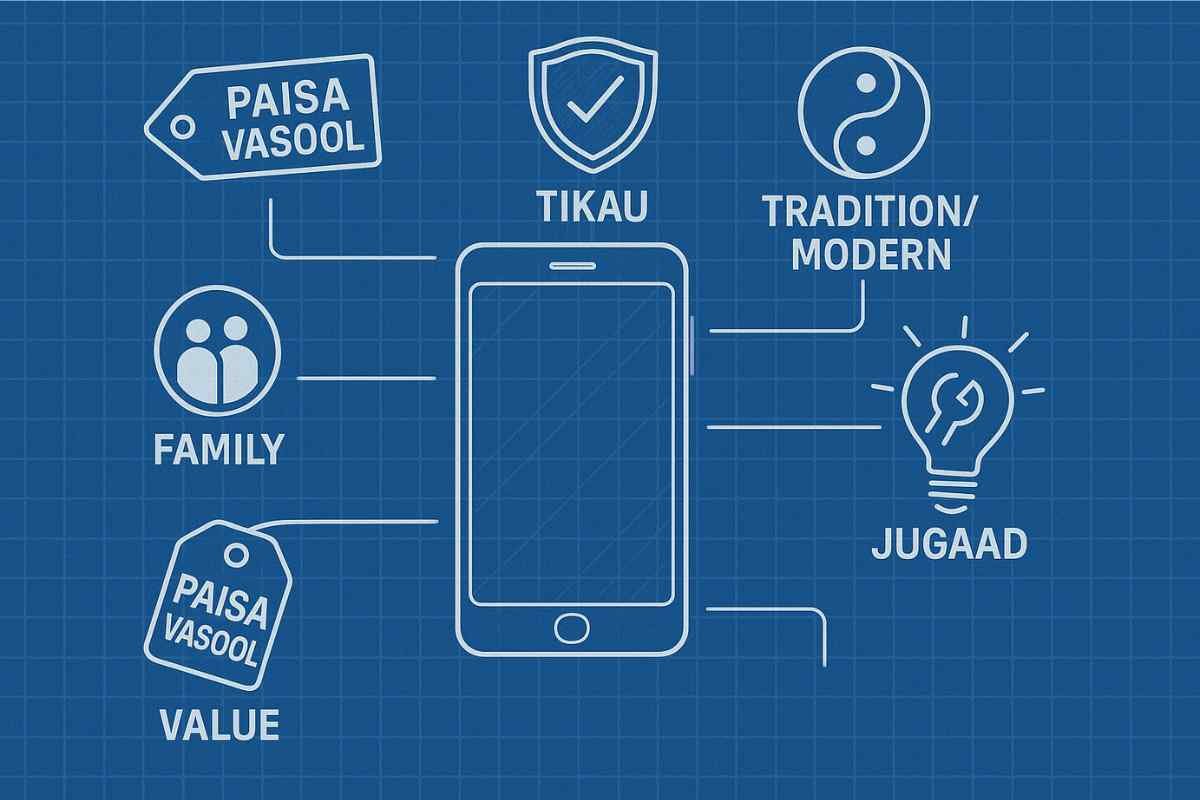
The Indian market is a glittering prize, a consumer landscape of over a billion people. It’s also a notorious graveyard for well-funded, globally successful products that arrived with great fanfare only to die a quiet, confusing death on the shelves. Why? Because they failed to understand a fundamental truth: Indian consumers don’t just buy products; they adopt solutions that fit into their unique cultural and social fabric.
To succeed here, you need more than just market research and a translated user manual. You need to decode the “cultural source code” that governs Indian consumer behavior. It’s a complex algorithm of tradition, aspiration, family dynamics, and a legendary ability to squeeze every last drop of value out of a purchase. For any entrepreneur or product developer wanting to build for India, understanding these unwritten rules is not just an advantage; it’s everything. Here are five cultural design principles to create products that Indians don’t just buy, but embrace.

1. The ‘Paisa Vasool’ Principle: Value Over Price
It’s a common mistake to label the Indian consumer as “price-sensitive.” It’s more accurate to say they are “value-obsessed.” The key question isn’t “Is it cheap?” but “Is it paisa vasool?” – am I getting my money’s worth?
- The Principle: Consumers evaluate a product based on its total utility, durability, and long-term benefit relative to its cost. The “cost-per-use” is an intuitive, if unspoken, calculation.
- Design Application: This is the principle that sparked the sachet revolution. A ₹2 shampoo sachet isn’t cheaper per ml than a large bottle, but its low entry price point and single-use convenience provided immense value to a consumer managing a tight weekly budget. Similarly, mobile data plans that offer more data per day, even if slightly more expensive overall, are often perceived as better value.
- The Takeaway: Don’t just make it cheap. Make it accessible. Design business models that align with cyclical cash flows and offer maximum perceived utility for every rupee spent.
2. The ‘Tikau’ Test: Build It to Last (and Last)
India is not a replacement market; it’s a repair market. We don’t just throw things away. We fix them, we find alternate uses for them, and we expect them to survive conditions that would make lesser products weep. A product is an investment, expected to serve the family for years.
- The Principle: Durability and robustness are non-negotiable features. The product must be tikau (long-lasting) and capable of withstanding rough handling, voltage fluctuations, and extreme weather.
- Design Application: This is why the Indian mixie/grinder is a beast, built with a powerful motor that can grind solid turmeric, unlike its delicate Western smoothie-making cousins. It’s why early, flimsy mobile phones failed, while Nokia built a legendary brand on the back of its near-indestructible devices.
- The Takeaway: Over-engineer for durability. Use robust materials. Assume your product will be used intensively and repaired multiple times. A reputation for being tikau is worth more than any marketing campaign.
3. The ‘Hum Saath Saath Hain’ Factor: Design for the Family, Not the Individual
Western design philosophy is intensely individualistic. Indian life, at its core, is communal. The family, not the individual, is often the primary unit of consumption and decision-making.
- The Principle: Products and services must cater to the needs, aspirations, and usage patterns of a multi-generational family unit.
- Design Application: Think of “family” data plans that allow sharing, cars that prioritize seating capacity over speed, refrigerators with larger vegetable crispers to accommodate fresh cooking for many, and even entertainment subscriptions that offer multiple user profiles. A feature that promotes sharing or collective benefit has a much higher chance of success.
- The Takeaway: Ask: “How does this product serve a family?” Think in terms of shared access, multi-user functionality, and collective value. If your product only speaks to the “me,” you’re missing the “we.”
4. The ‘Jugaad’ Imperative: Your Product’s Second Life
Jugaad is the uniquely Indian spirit of frugal, creative improvisation. It means your product will be used in ways you never, ever imagined in your pristine design lab. That plastic bottle will become a planter, that old saree will become a quilt, and that washing machine… well, let’s just say it might be used to make lassi for a wedding party (a legendary, if apocryphal, tale that perfectly illustrates the point).
- The Principle: Products should be simple enough to be understood and repaired locally, and robust enough to withstand creative (and sometimes bizarre) alternate uses.
- Design Application: Complex, proprietary electronics that can only be repaired by authorized dealers often struggle. Products with simple, modular designs fare better. The key is to build for a world of “what if” scenarios. What if the user tries to fix it themselves? What if they use it for a purpose it was never designed for?
- The Takeaway: Embrace the chaos. Build for resilience and adaptability. Your product’s ability to survive the jugaad stress test is a mark of true market fit.
5. The Aspiration-Tradition Tightrope: Be Modern, Respect Roots
The modern Indian consumer is a fascinating blend of global aspiration and deep-seated tradition. They want the latest technology and modern conveniences, but they want them delivered in a context that understands and respects their cultural values.
- The Principle: Successful products walk the tightrope between the modern and the traditional, offering global quality with a local soul.
- Design Application: Matrimonial websites are a perfect example: they use modern technology to serve the very traditional purpose of arranged marriage. E-commerce platforms that have special sections for puja items or ethnic wear brands that offer contemporary designs with traditional fabrics are tapping into this principle. It’s about being “glocal.”
- The Takeaway: Don’t just translate your product; transcreate it. Understand the cultural context in which it will be used. Offer modern solutions that don’t alienate traditional values.
Building for India requires more than just a business plan; it requires cultural empathy. By designing with these five principles in mind, you move beyond just selling a product and start creating something that truly belongs, something that Indians don’t just want, but welcome into their lives.
What other cultural principles do you think are crucial for product design in India? Share your examples in the comments below! If this guide gave you a new framework for thinking about the Indian market, please share it on WhatsApp, Facebook, and Twitter!