Table of Contents
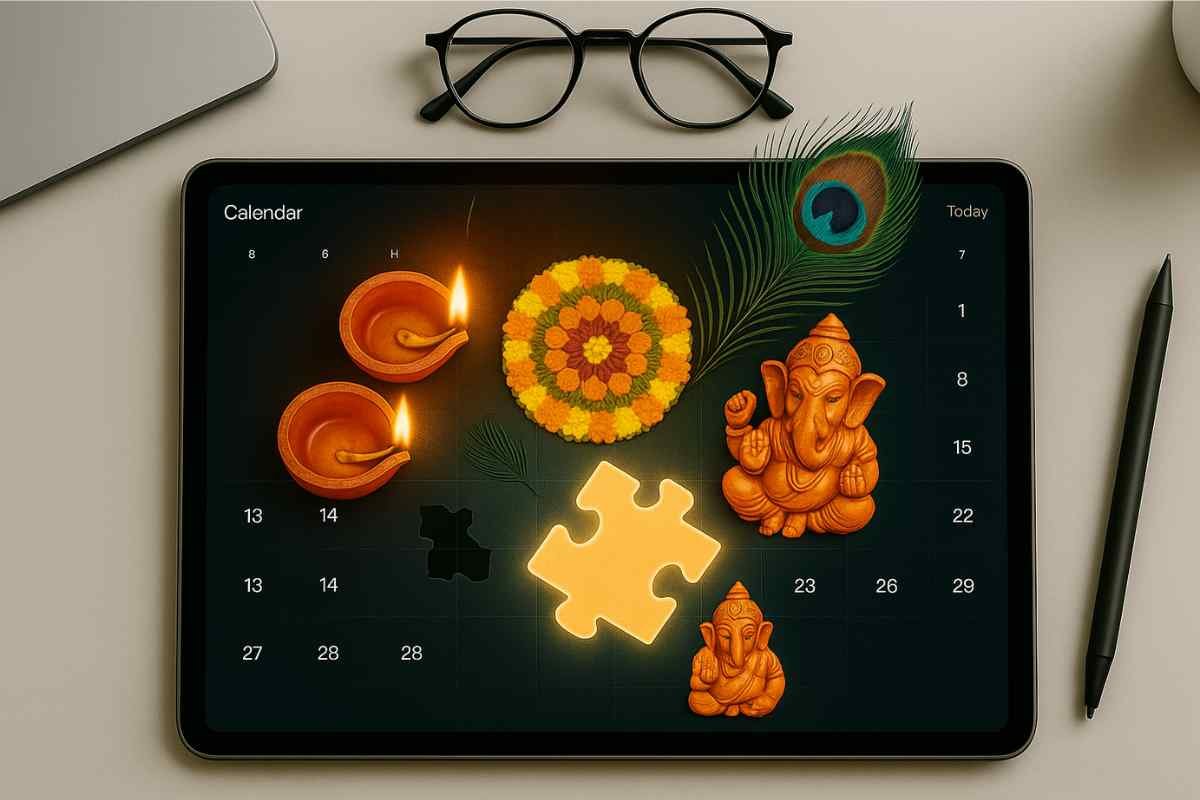
Ask any HR manager in a diverse Indian startup to show you their annual holiday calendar, and you won’t see a neat, single-column list. You’ll see a spreadsheet that looks like a battlefield map—a kaleidoscope of colour-coded chaos with mandatory holidays, restricted leaves, and floating days plotted against a backdrop of project deadlines and product launches.
One cell marks Pongal for the Tamilian contingent, another blocks Chhath Puja for employees from Bihar, while a third highlights Bihu for the Assamese team members. This isn’t just a leave policy; it’s India’s pluralism expressed in a Google Sheet.
In the global business world, holidays are a simple affair—a predictable, nationally uniform schedule. But in India, the calendar is a living, breathing entity, dictated by lunar cycles, regional traditions, and deep-seated faith. For a startup, where agility is paramount and teams are a melting pot of cultures from across the country, managing this beautiful complexity is one of the most underrated operational challenges.
It’s a logistical puzzle that tests a company’s flexibility, cultural sensitivity, and operational genius. And the startups that solve it don’t just survive—they unlock a powerful source of team cohesion and competitive advantage.
The Great Indian Holiday Puzzle
The root of the complexity lies in India’s very fabric. A team of just twenty people can easily represent ten different states, each with its own primary festival. While the whole country might celebrate Diwali and Eid, the biggest holiday of the year for a Keralite is Onam, for a Bengali, it’s Durga Puja, and for a Maharashtrian, it’s Ganesh Chaturthi.
The traditional corporate approach of a fixed list of 10-12 holidays inevitably leaves vast swathes of the workforce feeling unseen and undervalued. Forcing a Tamilian engineer to work through Pongal to get a day off for Holi, a festival with little personal significance to them, is a recipe for quiet resentment. It sends a subtle but clear message: your culture is secondary. Startups, who fight tooth and nail to attract and retain top talent, cannot afford this cultural tone-deafness.
The Rise of the Floating Holiday: An HR Masterstroke
Faced with this puzzle, the Indian startup ecosystem has pioneered an elegant solution: the flexible or ‘floating’ holiday policy. This is the ultimate HR jugaad. The company mandates a few national holidays like Independence Day, Republic Day, and perhaps Diwali, but designates the rest of the leave quota—typically 8 to 10 days—as floaters.
This empowers employees to choose their own holidays. The designer from Kolkata can take a week off for Pujo, the marketing lead from Gujarat can celebrate Navratri, and the developer from Punjab can observe Baisakhi. This simple shift from a top-down, one-size-fits-all model to an individualised approach is revolutionary. It fosters a sense of autonomy and respect, telling every employee that their cultural identity matters. It’s a low-cost, high-impact policy that builds immense loyalty and goodwill.
Launches, Deadlines, and the Auspicious Quarter
This holiday diversity has a profound impact on the rhythm of business itself. Product launches, marketing campaigns, and sales drives cannot be planned on a simple quarterly basis. They must be mapped against the festive calendar. The period from October to December isn’t just Q4; it’s the “festive season,” a time of peak consumer spending driven by Dussehra, Diwali, and Christmas. E-commerce giants like Flipkart and Amazon build their entire year around the “Big Billion Days” and “Great Indian Festival.”
Conversely, startups learn to anticipate productivity dips in certain regions during specific festivals. A wise manager knows that trying to schedule a major deadline for their Kolkata team during the week of Durga Puja is a fool’s errand. Customer support teams have to be staffed dynamically, ensuring that when one part of the country is celebrating, another is online to handle the load. This forces a level of strategic, decentralised planning that makes businesses more resilient and adaptable.
Turning Leave Policy into a Team-Building Exercise
The smartest startups don’t just manage this diversity; they celebrate it. They transform the potential for cultural fragmentation into an opportunity for team bonding. When it’s Onam, the entire office, regardless of their background, is treated to a traditional Sadhya lunch. During Eid, a Muslim colleague brings homemade biryani and sewiyan for everyone. Diwali becomes an office-wide celebration with rangoli competitions and mithai distribution.
These moments are powerful. They break down silos and create a space for colleagues to share a piece of their heritage. An engineer from Mumbai learns about the significance of Bihu from his Assamese teammate, not through a textbook, but by sharing a pitha in the office cafeteria. This cross-pollination of cultures builds empathy and strengthens interpersonal bonds far more effectively than any corporate offsite ever could.
Explaining Chhath Puja to a Client in California
This internal complexity often spills over into external communication, especially with global clients. An American or European partner, accustomed to a universally observed Christmas break, can be baffled by the rotating cast of out-of-office notifications from their Indian team. “Why was half the team offline for something called ‘Ganesh Chaturthi’ in September, and the other half is now off for ‘Diwali’ in November?”
Successful startups master the art of proactive communication. They educate their global clients about India’s festive calendar, setting expectations well in advance. They build buffer time into project timelines and ensure that there is always a minimum viable team available to handle critical issues. This transparency turns a potential point of friction into a demonstration of the startup’s meticulous planning and its uniquely Indian character.
In the end, the Indian festival calendar is much like the country itself: a little chaotic, incredibly diverse, and vibrant with life. For a startup, navigating it is a crash course in cultural intelligence, operational agility, and human-centric management. The companies that learn to dance to this complex rhythm don’t just create a happier workplace; they build a more resilient, empathetic, and fundamentally Indian organization.
What’s the most unique festival your company celebrates? How has your team navigated India’s diverse holiday calendar? Share your story in the comments below! If this piece resonated with your experience, share it on LinkedIn and other platforms—let’s start a conversation!